

Medication-Caffeine Timing Calculator
Calculate Safe Waiting Time
Results
Please select a medication and caffeine amount to see results.
It’s 7 a.m. You grab your coffee, swallow your pills, and head out the door. Sounds normal, right? But what if that cup of coffee is quietly messing with your medication-making it stronger, weaker, or even dangerous? This isn’t a myth. It’s happening every day, to millions of people who don’t realize their morning routine could be putting their health at risk.
How Caffeine Changes How Your Body Handles Medication
Caffeine isn’t just a stimulant. It’s a chemical that interacts directly with your liver’s drug-processing system, especially an enzyme called CYP1A2. This enzyme breaks down about 10-15% of all prescription drugs. When caffeine hangs around-especially if you drink coffee regularly-it blocks this enzyme. That means your meds don’t get broken down as fast. They build up. And that can turn a safe dose into an overdose.
Think of it like a highway. Your liver is the toll booth. Normally, drugs pass through quickly. But caffeine is a traffic jam. Everything backs up. Some drugs get stuck, others get pushed through too fast. Either way, your body doesn’t know what it’s dealing with anymore.
Warfarin: When Coffee Makes Blood Thin Too Much
If you’re on warfarin (Coumadin), your doctor checks your INR levels to make sure your blood isn’t too thin or too thick. Now add coffee. Studies show that drinking caffeine can raise your INR by 15-25% within just 24 hours. That means your blood takes longer to clot. You’re at higher risk for bleeding-bruising easily, nosebleeds, even internal bleeding.
It’s not about how much you drink. It’s about consistency. One cup a day? Fine. But if you suddenly switch from one cup to three, your INR can spike. The American Heart Association recommends limiting caffeine to 200 mg daily (about two cups of coffee) and keeping it the same every day. No surprises.
Thyroid Meds: Why You Must Wait an Hour After Your Pill
Levothyroxine (Synthroid, Levoxyl) is one of the most commonly prescribed drugs in the U.S. But coffee? It’s a silent thief. A 2017 study with 98 patients showed coffee reduces absorption by 25-57%. That’s not a small drop. That’s enough to make your TSH levels climb back up-meaning your thyroid isn’t getting the hormone it needs.
One Reddit user shared: “My TSH was stable at 1.8 for years. Then it jumped to 4.5. I didn’t change my dose. I just realized I was taking my pill with coffee.” After switching to waiting 60 minutes after taking Synthroid before coffee, their levels returned to normal.
The Endocrine Society’s official advice? Wait 30 to 60 minutes after taking your thyroid medication before drinking anything, especially coffee. Even decaf has 2-15 mg of caffeine. If you’re sensitive, avoid it entirely until after your pill.
Cardiac Stress Tests: Why You Can’t Have Even One Cup
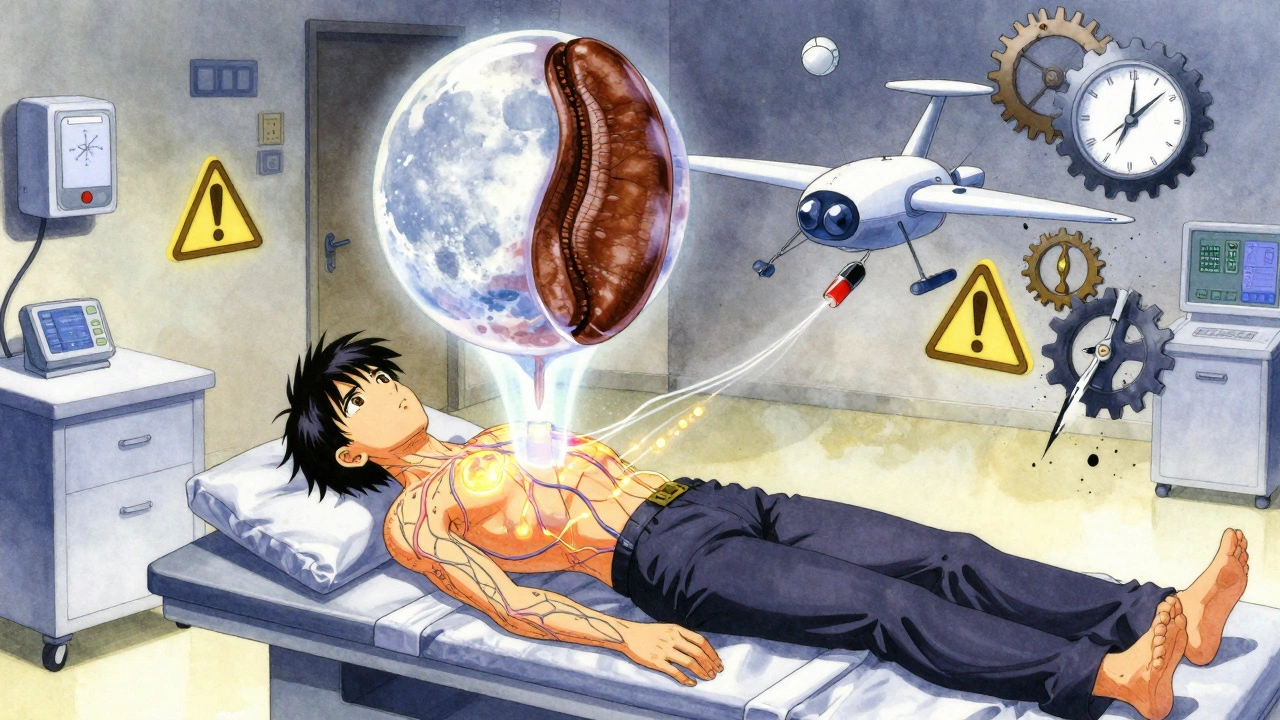
Ever had a stress test? If you’re on adenosine or dipyridamole to stress your heart, caffeine can ruin the whole thing. These drugs work by blocking adenosine receptors. Caffeine? It blocks the same receptors. So if you’ve had coffee in the last 24 hours, the drug can’t do its job. Your heart won’t respond the way it should. The test becomes useless.
That’s why cardiologists require 24 hours of caffeine abstinence. No coffee. No tea. No energy drinks. No chocolate. Even soda counts. One patient on HealthTap wrote: “I had one cup of coffee. Test was inconclusive. Had to reschedule. Lost a day’s pay.”
Seizure Medications: Caffeine as a Trigger
If you have epilepsy or take carbamazepine, phenytoin, valproate, or any other anti-seizure drug, caffeine isn’t just a stimulant-it’s a potential trigger. Research in Epilepsy & Behavior found that patients who consumed caffeine had 18-35% more seizures than those who avoided it.
Why? Caffeine lowers the seizure threshold. It makes brain cells more excitable. For someone already on the edge, that’s enough to push them over. Some neurologists now treat caffeine like alcohol or sleep deprivation: a known risk factor. If you’re seizure-prone, cutting caffeine isn’t optional. It’s part of your treatment plan.
Psychiatric Drugs: Anxiety, Jitters, and Overdose Risk
SSRIs like fluvoxamine (Luvox) and escitalopram (Lexapro) are broken down by CYP1A2. Caffeine blocks that enzyme. Result? More drug in your bloodstream. Harvard Health found fluvoxamine levels can rise by 33% when taken with coffee. That’s not just “more effect.” That’s increased risk of serotonin syndrome-agitation, rapid heart rate, high fever, confusion.
On the flip side, tricyclic antidepressants like amitriptyline build up too. Plasma levels can spike 20-40%. Patients report feeling dizzy, dry-mouthed, and overly sedated. One user on PatientsLikeMe said: “I took Adderall with my morning coffee. Felt like my heart was going to explode. Couldn’t sleep for 12 hours.”
And if you’re on lithium? Caffeine can make your kidneys flush it out faster. Your levels drop. Your mood swings return. It’s a tightrope walk.
Stimulants and Cold Meds: A Dangerous Mix
Combining caffeine with pseudoephedrine (Sudafed), ephedrine, or amphetamines (Adderall, Vyvanse) is like pouring gasoline on a fire. Both caffeine and these drugs speed up your heart and raise blood pressure. Together? They amplify each other.
University Hospitals’ 2025 update found that mixing these can cause heart rate increases of 20-35 beats per minute and systolic blood pressure spikes of 15-25 mmHg within 45 minutes. For someone with heart disease or high blood pressure? That’s a recipe for a heart attack or stroke.
Diabetics face another risk. Pseudoephedrine with caffeine can raise blood sugar by 15-25 mg/dL. That’s enough to throw insulin dosing off track. The recommendation? Avoid caffeine for 4-6 hours after taking these cold meds.
What About Aspirin and Caffeine?
You’ll find caffeine in many pain relievers-Excedrin, Anacin, Midol. The combo works well for headaches. But here’s the catch: some European studies suggest high doses of caffeine with aspirin might increase stomach bleeding risk. Mayo Clinic says it’s safe for most people. But if you have ulcers, take blood thinners, or are over 65? Skip the combo. Talk to your pharmacist.
How to Stay Safe: Simple Rules That Work
- Wait 60 minutes after taking thyroid meds before drinking coffee.
- Avoid caffeine for 24 hours before a cardiac stress test.
- Limit coffee to 2 cups a day if you’re on warfarin. Keep it consistent.
- Don’t mix caffeine with stimulants (Adderall, Sudafed, ephedrine). Wait at least 4-6 hours.
- Check labels. Caffeine hides in energy drinks, chocolate, tea, and even some weight-loss pills.
- Decaf isn’t safe. It still has 2-15 mg caffeine. For sensitive meds, treat it like regular coffee.
- Ask your pharmacist: “Does this drug interact with caffeine?” Don’t assume it’s fine.
When to Seek Help Immediately
Some reactions need emergency care. Call 911 or go to the ER if you experience:
- Heart rate over 120 bpm
- Systolic blood pressure above 180 mmHg
- Difficulty breathing
- Confusion, vision changes, or loss of coordination
- Twitching, rigid muscles, or shaking
- Seizures
- Worsening depression or suicidal thoughts
These aren’t side effects. They’re warning signs your body is overloaded.
Why This Keeps Happening
Most people don’t know. Doctors don’t always ask. Pharmacies don’t always warn. But the data is clear: 2.8% of all adverse drug events in adults over 50 are linked to caffeine. That’s 1 in 35 people. Among those over 65? It’s 4.2%. That’s more than 150 million Americans at risk.
Hospitals and clinics are starting to catch up. 92% now screen for caffeine interactions in their electronic records. The FDA added 15 new caffeine warnings to drug labels in 2024. Research is underway to test genetic markers that predict who’s most at risk.
But until then, you’re your own best defense. Know your meds. Know your coffee. And don’t assume it’s harmless.
Can I drink decaf coffee with my medications?
Decaf coffee still contains 2-15 mg of caffeine per cup. For most people, that’s not a problem. But if you’re on thyroid medication, seizure drugs, or certain antidepressants, even that small amount can interfere. If your doctor told you to avoid caffeine entirely, treat decaf the same way. Wait 60 minutes after your pill, or skip it altogether.
Does tea have the same effect as coffee?
Yes. Black tea has about 40-70 mg of caffeine per cup-similar to a small coffee. Green tea has less, around 20-45 mg, but it still contains caffeine. If your medication warns against caffeine, tea counts. Herbal teas like chamomile or peppermint are caffeine-free and safe. Always check the label.
How long does caffeine stay in my system?
Caffeine peaks in your blood within 30-60 minutes. But it takes 5-6 hours for half of it to clear. For some people, especially those with liver issues or on certain medications, it can take 10-12 hours. That’s why 24-hour abstinence is required before cardiac tests. If you’re on a sensitive drug, assume caffeine lingers for a full day.
Can I switch to caffeine-free energy drinks?
Not necessarily. Many “caffeine-free” energy drinks still contain stimulants like guarana, yerba mate, or synephrine-all of which can interact with medications the same way caffeine does. Read the ingredient list. If it says “natural stimulants,” assume it’s not safe. Stick to water, herbal tea, or electrolyte drinks.
What if I accidentally had caffeine with my medication?
If it was a one-time slip-up and you feel fine, monitor yourself. Watch for symptoms like rapid heartbeat, dizziness, anxiety, or unusual fatigue. If you’re on warfarin, get your INR checked sooner than scheduled. If you’re on seizure meds and feel a twitch or aura coming on, contact your neurologist. Don’t panic-but don’t ignore it either. The next time, plan ahead.
olive ashley
December 5, 2025 AT 12:49So let me get this straight-you’re telling me my morning coffee is basically a silent assassin for my meds? And nobody told me this? I’ve been taking levothyroxine with my espresso for 7 years. My TSH was always ‘fine.’ Now I’m wondering if my doctor’s just been lying to me. Or worse-didn’t care. This isn’t medical advice. This is a public health cover-up.
Priya Ranjan
December 5, 2025 AT 21:42You people in the West are so careless. In India, we’ve known for generations that coffee interferes with medicines. Our grandmothers brewed herbs in clay pots and never mixed anything with caffeine. Now you want to blame the system? It’s your own laziness. Wait 60 minutes. It’s not that hard.
Gwyneth Agnes
December 7, 2025 AT 00:39Decaf isn’t safe. Stop lying to yourself.
Ashish Vazirani
December 8, 2025 AT 05:02Of course caffeine messes with your meds-because Big Pharma doesn’t want you to know how cheap and dangerous their pills are! They profit from your confusion! They make you take more drugs because your body can’t process them properly-thanks to caffeine! It’s a cycle! A trap! And they call it ‘healthcare’? Ha! I’ve seen the documents. This is all planned. They want you weak. Dependent. Controlled.
pallavi khushwani
December 9, 2025 AT 17:17I used to drink coffee with my thyroid meds like it was nothing. Then I started feeling exhausted all the time. I read this post, waited an hour, and honestly? I feel like a new person. Not magic. Just common sense. Maybe we don’t need more science-just more patience. And maybe a little more respect for our own bodies.
Dan Cole
December 10, 2025 AT 00:33Let’s be precise here: CYP1A2 inhibition is not a ‘maybe.’ It’s a pharmacokinetic certainty. The half-life extension of fluvoxamine due to caffeine co-ingestion is statistically significant (p < 0.01) in multiple double-blind RCTs. To dismiss this as ‘folk wisdom’ is not just ignorant-it’s clinically dangerous. Your coffee is not a benign beverage. It’s a competitive inhibitor of hepatic cytochrome P450 enzymes. Act accordingly.
Billy Schimmel
December 11, 2025 AT 11:56So I took my Adderall with coffee one morning. Felt like my heart was trying to punch its way out of my chest. Then I read this. Now I drink water. And I feel like a genius. Not because I’m smart. But because I didn’t ignore the warning signs. Sometimes the simplest fix is the one you’re too busy to see.
Katie O'Connell
December 12, 2025 AT 15:50It is, without question, a matter of considerable concern that the general populace remains woefully uninformed regarding the pharmacodynamic interactions between xanthine derivatives and prescribed pharmaceutical agents. The absence of standardized patient education protocols within primary care settings constitutes a systemic failure of medical communication. One must wonder whether institutional negligence has superseded clinical diligence.
Inna Borovik
December 14, 2025 AT 10:28Wait-you think decaf is the problem? What about the mold in your coffee beans? The heavy metals? The acrylamide? Caffeine’s the least of your worries. And don’t get me started on how your ‘thyroid meds’ are probably laced with fillers from China. You’re not being poisoned by coffee-you’re being poisoned by the system. But hey, at least you’re blaming the right thing. Sort of.
Jackie Petersen
December 14, 2025 AT 11:38Why do they always blame coffee? What about the 50 other chemicals in your meds? The plastic in your pill bottle? The water you drink? The air you breathe? This is just fear-mongering dressed up as science. I drink coffee with everything. I’m 72. Still running marathons. Who are you to tell me what to do?
Rashmi Gupta
December 14, 2025 AT 22:38Actually, studies show that in low doses, caffeine can enhance the absorption of certain antihypertensives. This article is biased. It ignores the benefits. Only focuses on fear. Typical Western media. Always exaggerating. Always one-sided. I drink my coffee with my pills. And I’m fine. Because I think for myself.
Andrew Frazier
December 15, 2025 AT 02:57Y’all act like this is new. My grandpa in Ohio used to say, ‘If your pills don’t work, blame the coffee.’ He was right. And now some fancy article with ‘CYP1A2’ in it is telling us what we’ve known since the 80s. Meanwhile, the FDA’s still letting Big Pharma hide caffeine warnings in tiny print. I’m not mad. I’m just disappointed.
Mayur Panchamia
December 15, 2025 AT 12:50Let me tell you something, my American friends-you think caffeine is the enemy? Try taking your meds with chai masala, 10 grams of sugar, and 300 mg of guarana in a ‘healthy’ energy drink. Then come back and tell me coffee is the problem. We in India know how to mix things. But you? You don’t even know what’s in your ‘natural’ supplements. You’re walking around with your eyes closed. And now you’re surprised your heart’s racing? Please.