

When you’re on long-term corticosteroids - whether for asthma, rheumatoid arthritis, or an autoimmune condition - the last thing you think about is your bones. But here’s the hard truth: corticosteroid-induced osteoporosis is real, fast, and often overlooked. Within just three months of starting daily prednisone at 2.5 mg or more, your bones start to weaken. By six months, your risk of breaking a bone can double. And if you’re on 7.5 mg or more? That risk jumps even higher. This isn’t a slow, aging-related decline. This is rapid, predictable bone loss - and it’s preventable.
How Corticosteroids Attack Your Bones
Glucocorticoids like prednisone don’t just reduce inflammation. They mess with the entire system that keeps your skeleton strong. Your bones are always remodeling - old bone breaks down, new bone builds up. Corticosteroids break that balance. They shut down the cells that build bone (osteoblasts), kill off the ones that support bone structure (osteocytes), and keep the bone-eating cells (osteoclasts) active longer than they should. The result? Bone loss that’s 5 to 15% faster in the first year than normal aging.
It’s not just about bone density. Corticosteroids also reduce how much calcium your body absorbs from food - by about 30%. They make your kidneys dump more calcium in urine. And they blunt the effect of weight-bearing exercise, cutting its bone-strengthening power by nearly a quarter. So even if you’re walking or lifting weights, your bones aren’t getting the full benefit.
That’s why the spine and hips - areas made of spongy, trabecular bone - are hit hardest. A fracture in your lower back or hip isn’t just painful. It can change your life. And here’s the kicker: half of all glucocorticoid-related fractures happen in the first year of treatment. That’s not a slow burn. That’s an emergency waiting to happen.
Stop the Damage Before It Starts
The most powerful tool you have? The lowest possible dose for the shortest time. Every milligram counts. Studies show that dropping from over 7.5 mg of prednisone daily down to 7.5 mg or less cuts fracture risk by 35% in just six months. If your doctor can reduce your dose without losing control of your condition, do it. Ask: "Is this the minimum dose I need?" Don’t assume the dose you were given is the only one possible.
And don’t wait. The best window for prevention is the first 3 to 6 months after starting treatment. That’s when bone loss is fastest. If you’re already on steroids for three months or more, you’re in the danger zone. Action now can still reverse damage.
Calcium and Vitamin D: The Non-Negotiable Base
Every single person on long-term corticosteroids needs calcium and vitamin D - no exceptions. This isn’t optional. It’s the foundation.
Target: 1,000 to 1,200 mg of calcium per day. Get as much as you can from food - dairy, leafy greens, fortified foods. But most people still need a supplement to hit the target. Don’t rely on one 500 mg tablet. You might need two.
For vitamin D: 600 to 800 IU daily is the minimum. Many need 800 to 1,000 IU to keep blood levels above 20 ng/mL. Why? Because corticosteroids make your body use up vitamin D faster. A study found that people taking 1,000 mg calcium and 500 IU vitamin D daily lost 0.72% of spine bone density per year - while those on placebo lost 2%. That’s a huge difference.
Get your blood level checked. If it’s below 30 ng/mL, you’re not getting enough. And remember: vitamin D doesn’t work without calcium. They’re a team.
Movement Matters - But It’s Not Enough Alone
You’ve heard "move more" - and it’s true. Weight-bearing exercise like walking, stair climbing, or resistance training helps. But corticosteroids weaken your bones’ response to movement. So you need more than just a daily walk. Aim for 30 minutes on most days. Include strength training twice a week. Lift light weights. Use resistance bands. Do squats. Your bones need load to stay strong.
But here’s the catch: exercise alone won’t stop steroid-induced bone loss. It’s a helper, not a cure. Skip it? You’re making things worse. Do it? You’re giving yourself a fighting chance. But you still need calcium, vitamin D, and possibly medication.
Smoking and Alcohol: Two More Things to Quit
Smoking doesn’t just hurt your lungs. It kills bone cells. Quitting smoking reduces fracture risk by 25 to 30%. That’s like adding a layer of protection you didn’t have before. If you smoke and take steroids, you’re stacking two major risk factors. Stop.
Alcohol? Limit it to under 3 standard units a day. More than that? It increases fall risk and interferes with bone repair. One glass of wine? Fine. Three bottles of beer? That’s a problem.
When Medication Is Necessary
If you’re on corticosteroids long-term - especially if you’re over 50, have a history of fracture, or have low bone density - you likely need more than diet and lifestyle changes.
First-line treatment? Bisphosphonates. Risedronate (5 mg daily or 35 mg weekly) cuts vertebral fractures by 70% and other fractures by 41%. Alendronate works too. These are pills. They’re cheap. They’re proven.
For those who can’t take pills or need stronger action: zoledronic acid. One IV infusion a year. It boosts spine bone density by 4.5% in 12 months. That’s more than double the gain from placebo.
For high-risk patients - those with a T-score below -2.5 or who’ve already fractured - denosumab (injection every 6 months) or teriparatide (daily injection) are options. Teriparatide is especially powerful. It doesn’t just slow loss - it rebuilds bone. In head-to-head trials, it increased spine density 2.3 times more than alendronate in steroid users.
But here’s the reality: most people don’t get these. Only 15% of long-term steroid users get care that follows guidelines. Why? Because doctors forget. Patients don’t know. Systems don’t remind.
The Hidden Crisis: Who’s Getting Left Behind
Women are more likely to be screened and treated than men - 76% vs 44%. That’s a gap. Older adults get more attention than younger ones. People with rheumatoid arthritis get more care than those on steroids for asthma or lupus. And in primary care? Only 22% of doctors feel confident managing this. That’s not a patient problem. That’s a system failure.
Studies show that if your doctor gets an automatic alert in their electronic record when you’ve been on steroids for more than 90 days - and if they’re prompted with a checklist: "Check BMD. Prescribe calcium. Assess fracture risk. Offer bisphosphonate." - intervention rates jump from 40% to 92%. That’s not magic. That’s structure.
You can’t wait for your doctor to think of it. Ask: "Have you checked my bone density?" "Am I on a dose that puts me at risk?" "Should I be on a bisphosphonate?" If they say "maybe," say "prove it."
What You Need to Do Right Now
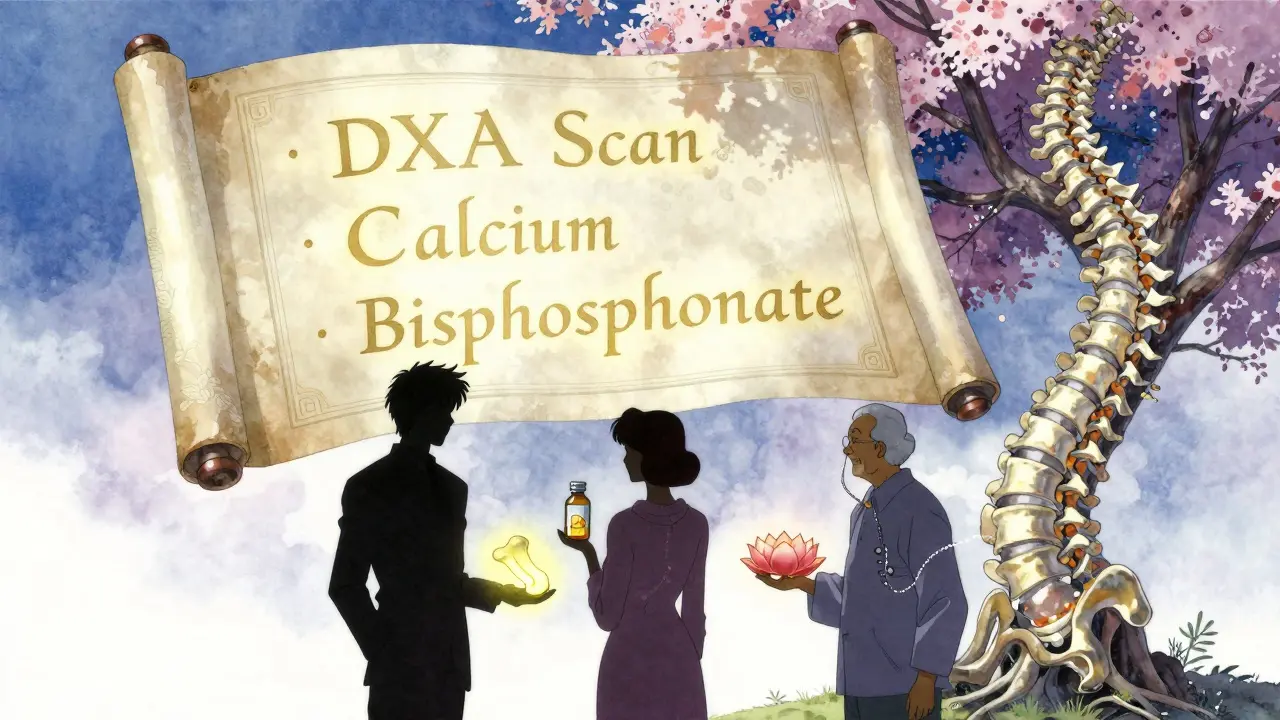
- If you’ve been on corticosteroids for 3 months or more, ask for a bone density scan (DXA). Don’t wait for symptoms.
- Take 1,000-1,200 mg calcium and 800-1,000 IU vitamin D daily - no exceptions.
- Get moving: 30 minutes of weight-bearing activity most days. Add strength training twice a week.
- Quit smoking. Cut alcohol to under 3 units per day.
- If you’re over 50, have a prior fracture, or your dose is 7.5 mg or more of prednisone daily - ask about bisphosphonates.
- Keep track. Use a pill organizer. Set phone reminders. If you forget supplements, you’re at risk.
The good news? This isn’t fate. Bone loss from steroids is one of the most preventable complications in medicine. You don’t need to be a medical expert. You just need to ask the right questions - and stick with the plan. Your bones won’t thank you today. But they’ll thank you in five years.
Can I stop taking my corticosteroids to protect my bones?
No. Stopping corticosteroids suddenly can be dangerous - especially if you’re on them for autoimmune disease, asthma, or organ transplant rejection. The goal isn’t to stop the medication, but to use the lowest effective dose for the shortest time. Work with your doctor to find that balance. Never adjust your dose without medical supervision.
Do I need a bone density test if I feel fine?
Yes. Osteoporosis has no symptoms until you break a bone. By then, it’s too late. If you’ve been on corticosteroids for 3 months or more, get a DXA scan - even if you’re young and feel healthy. The scan takes 10 minutes. The results can save you from a life-changing fracture.
Are bisphosphonates safe for long-term use with steroids?
Yes. Bisphosphonates like risedronate and alendronate are well-studied in people on long-term steroids. They’re the most effective and safest first-line option. Side effects like stomach upset are common but manageable. If you can’t tolerate pills, ask about the yearly IV version (zoledronic acid). The risk of serious side effects like jaw bone problems is extremely low - far lower than the risk of a hip fracture.
Why does my doctor say I don’t need medication if my bone density is normal?
Because guidelines don’t rely only on bone density. Your fracture risk comes from multiple factors: steroid dose, age, past fractures, family history, and more. Even with normal bone density, if you’re on 7.5 mg or more of prednisone daily, your risk is still high. The FRAX tool, adjusted for steroid use, often shows elevated risk even when BMD looks okay. Don’t rely on one number - ask for a full risk assessment.
How long should I stay on osteoporosis medication?
It depends. If you stop corticosteroids, your risk drops. Some people can stop bisphosphonates after 3-5 years if their bone density improves and they’re off steroids. But if you’re still on steroids, you’ll likely need ongoing treatment. Your doctor should recheck your bone density every 1-2 years and reassess your risk. Don’t assume you’re "cured" just because you feel fine.
What Comes Next
If you’re on long-term corticosteroids, your next step isn’t more research. It’s action. Call your doctor. Say: "I’m on steroids. I want to protect my bones. Can we review my fracture risk?" Ask for a DXA scan. Ask about calcium and vitamin D. Ask if bisphosphonates are right for you. If they say no, ask why - and ask for the evidence. You’re not being difficult. You’re being smart.
The system is broken. But you don’t have to wait for it to fix itself. You have more power than you think. Start today. Your bones will thank you later.
Andrew Poulin
March 8, 2026 AT 03:44Calcium + D3 isn't optional. It's your baseline armor. Take it. Or pay later.
Ferdinand Aton
March 10, 2026 AT 02:12amber carrillo
March 11, 2026 AT 13:06Aaron Pace
March 11, 2026 AT 15:19Adebayo Muhammad
March 11, 2026 AT 20:08Bridget Verwey
March 12, 2026 AT 21:29Anyway-yes. Do the damn scan. Take the calcium. Quit smoking. Stop acting like your bones are indestructible because you're 32 and 'feel fine'.
Weston Potgieter
March 13, 2026 AT 07:35Vikas Verma
March 13, 2026 AT 17:23Sean Callahan
March 15, 2026 AT 12:30phyllis bourassa
March 17, 2026 AT 04:44William Minks
March 18, 2026 AT 04:56