


Why Air Pollution Makes Asthma Worse
Every year, millions of people with asthma struggle to breathe because of dirty air. It’s not just a bad day outside-it’s a real threat. Air pollution doesn’t cause asthma in everyone, but it makes symptoms flare up fast. Particles like PM2.5 (tiny dust and soot), nitrogen dioxide from cars, and ground-level ozone from traffic and factories all irritate the lungs. For someone with asthma, that means coughing, wheezing, chest tightness, and needing their inhaler more often.
Studies show that on high-pollution days, emergency room visits for asthma jump. In one 2024 study, people with asthma who got alerts when pollution spiked saw their asthma control scores improve by over 15% in just eight weeks. That’s not a small change-it means fewer missed school days, less nighttime waking, and less reliance on rescue inhalers. Even during the pandemic lockdowns, when traffic dropped, asthma symptoms improved across the board. When pollution went down, people breathed easier.
How to Check Air Quality (And What to Do When It’s Bad)
You don’t need to guess if the air is safe. The Air Quality Index (AQI) tells you exactly what’s in the air, and it’s free to check. Go to AirNow.gov or use apps like AirVisual or PurpleAir. The scale is simple:
- AQI 0-50: Good. No limits.
- AQI 51-100: Moderate. Sensitive groups-like people with asthma-should cut back on long outdoor workouts.
- AQI 101-150: Unhealthy for sensitive groups. Avoid prolonged outdoor time. Keep kids inside.
- AQI 151-200: Unhealthy. Everyone should stay indoors as much as possible.
- AQI 201+: Very unhealthy to hazardous. Don’t go outside unless absolutely necessary.
Even if you feel fine, your lungs are still reacting. A 2023 survey found that 68% of asthma patients check the AQI-but only a third actually change their plans. If you work outside, talk to your employer about adjusting hours or moving tasks indoors on bad-air days. If you’re a parent, plan indoor playdates when pollution is high. Small changes add up.
Make Your Home a Safe Zone
Your home should be your refuge. But if you live near a highway or in a city, pollution seeps in through windows, doors, and ventilation. Studies show that even with windows closed, indoor PM2.5 levels can reach 60-80% of outdoor levels during wildfires or heavy traffic.
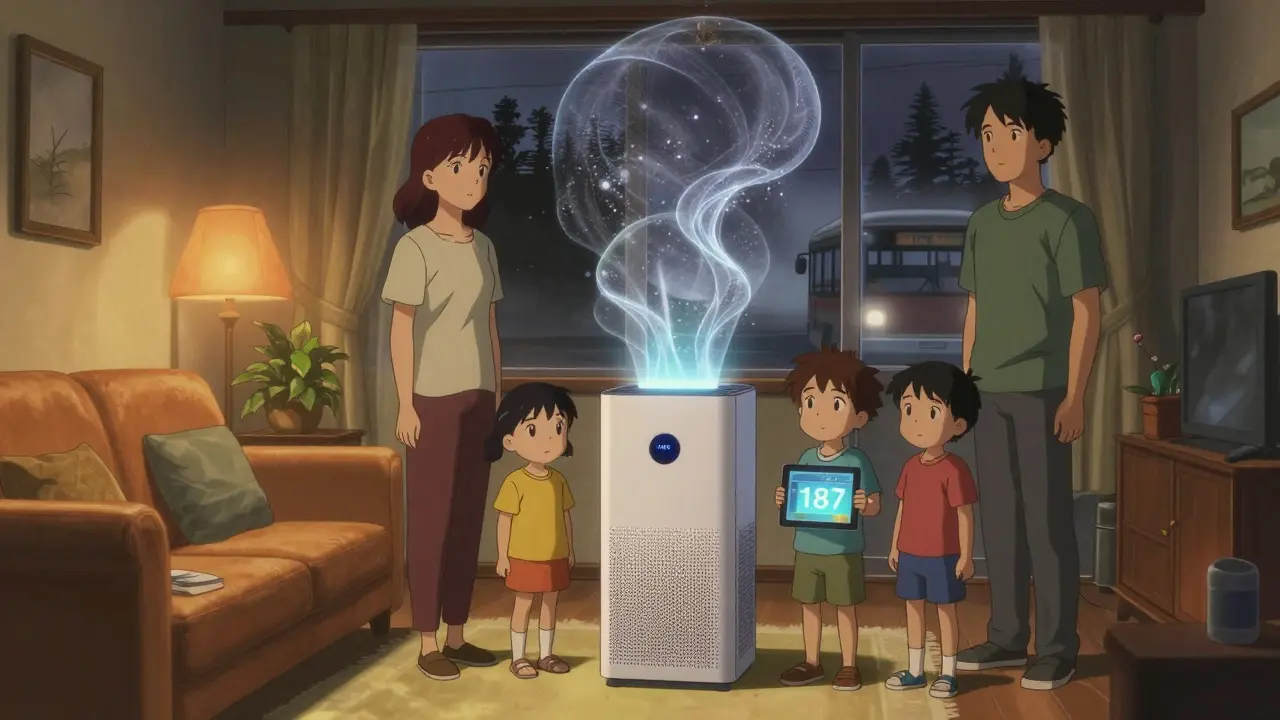
The best defense? A good air filter. Look for a portable air purifier with a HEPA filter. These capture 99.97% of particles as small as 0.3 microns-the exact size of most harmful pollutants. Don’t buy a cheap one that doesn’t list its CADR (Clean Air Delivery Rate). For a 300-square-foot room, get a unit with a CADR of at least 200. Bigger rooms need bigger numbers.
Also, upgrade your HVAC filter. A MERV 13-16 filter catches far more particles than the basic MERV 8 filters most homes use. Change it every 3 months, or sooner if you see dust building up. And don’t put your air purifier against the wall. Place it in the center of the room, away from furniture. Studies show that blocking airflow cuts efficiency by up to half.
What About N95 Masks?
N95 masks are great in theory-they block 95% of particles. But they’re not magic. They only work if they fit perfectly. Most adults don’t fit them right. Kids? Forget it. The CDC recommends them for wildfire smoke, but doctors like Dr. John Balmes from UCSF warn they can give a false sense of security. If your mask slips, you’re breathing in polluted air anyway.
They’re useful for short trips-like walking to the car or running a quick errand on a bad-air day. But they’re not a long-term solution. Don’t rely on them while you’re exercising outdoors or sitting in a park. Better to stay inside and use a HEPA filter.
Schools and Workplaces: Bigger Changes, Bigger Impact
Individual actions help-but policy changes save lives. In Massachusetts, schools moved bus drop-off zones away from playgrounds and banned idling. Result? Indoor PM2.5 dropped by 22-35%, and asthma-related absences fell by 41%. In Los Angeles, switching to electric school buses cut indoor pollution in schools near bus depots by 35%.
Employers have a role too. OSHA recommends keeping indoor humidity between 30-50% to stop mold and dust mites. That means using a dehumidifier if needed-costing $100-$300 a year to run. If you work in construction, ask about air filtration for job trailers. If you’re in an office, push for better HVAC filters. These aren’t luxuries-they’re health protections.
The Cost of Clean Air
HEPA filters cost $50 to $800. Replacement filters run $20-$100 every 3-6 months. That’s expensive for some families. But consider this: a single asthma emergency room visit can cost over $3,000. A year of missed school or work? That’s lost income and stress. Many families spend more on inhalers and doctor visits than they do on a good air purifier.
Some cities offer subsidies. Check with your local health department. In California, low-income households can get free or discounted air purifiers through state programs. Don’t assume you can’t afford it-there are options.

What’s Changing in the Future
Big changes are coming. The EPA is proposing to tighten the annual PM2.5 standard from 12 μg/m³ to 9-10 μg/m³. The American Thoracic Society says it still isn’t enough-they want 8 μg/m³. But even small steps matter. London’s Ultra Low Emission Zone cut childhood asthma hospitalizations by nearly 12% in two years.
Researchers are now testing wearable sensors that alert kids with asthma when pollution spikes. These devices link to apps that notify parents and doctors. The NIH is funding pilot programs to connect air quality data directly to electronic health records. Imagine your doctor seeing that your child’s asthma worsened every time pollution rose-and adjusting treatment before it gets bad.
What You Can Do Today
You don’t need to wait for government action to make a difference. Start with three simple steps:
- Check the AQI every morning before planning outdoor time.
- Buy a HEPA air purifier for your bedroom-even a small one under $150 can help.
- Ask your child’s school if they have anti-idling policies and clean air filters.
These aren’t perfect solutions. But they’re real, proven, and within reach. Air pollution isn’t going away overnight. But with the right tools and habits, you can protect your lungs-day after day.
Can air pollution cause asthma in children?
Yes. A 2019 study in The Lancet Planetary Health found that air pollution contributes to about 4 million new cases of childhood asthma every year worldwide. Pollutants like PM2.5 and nitrogen dioxide damage developing lungs, increasing the risk of asthma in kids who are genetically prone to it. It’s not the only cause-but it’s one of the most preventable.
Do air purifiers really help with asthma?
Yes, when used correctly. A 2021 Johns Hopkins study found that HEPA air purifiers reduced indoor PM2.5 levels by 55-67%. People with asthma who used them reported fewer symptoms, less nighttime waking, and fewer inhaler uses. But they only work if the filter is changed on time and the unit is sized properly for the room.
Is it safe to exercise outside if I have asthma?
It depends on the air quality. On days with AQI above 100, avoid prolonged or intense outdoor exercise. Morning air is often cleaner than afternoon air, especially in cities, because ozone builds up as the day heats up. If you must go out, choose parks over busy streets and wear a mask only for short trips. Always carry your rescue inhaler.
How do I know if my HEPA filter is working?
Check the manufacturer’s instructions for filter life. Most last 6-12 months. If your purifier has a filter replacement indicator, trust it. If not, set a reminder every 3 months. You can also test it: place a small piece of tissue near the air outlet. If you feel strong airflow, it’s working. If the air feels weak or dusty, the filter is clogged and needs replacing.
Can indoor plants help reduce air pollution?
No, not in any meaningful way. While some studies show plants can absorb tiny amounts of VOCs in lab settings, they don’t remove PM2.5, ozone, or other major asthma triggers. The amount of air they can clean is negligible compared to a HEPA filter. Don’t rely on plants for asthma control. They’re nice to look at-but they’re not medical equipment.
What should I do if I can’t afford an air purifier?
Close windows and doors on high-pollution days. Use your HVAC system on recirculation mode. Run a bathroom fan or kitchen hood while cooking to pull out fumes. Make a DIY air filter by taping a MERV 13 filter to a box fan-this is a proven, low-cost method endorsed by the California Air Resources Board. It won’t be as quiet or stylish, but it works.
Final Thoughts: It’s Not Just About You
Asthma isn’t just a personal health issue-it’s a public health crisis fueled by pollution. You can protect yourself and your family with filters, alerts, and smart choices. But lasting change comes when communities demand cleaner air. Support policies that reduce traffic emissions, push for electric buses, and demand stricter air quality standards. Your lungs-and your children’s lungs-depend on it.
Hilary Miller
January 22, 2026 AT 08:06Simple. Effective.
Margaret Khaemba
January 23, 2026 AT 15:41Also, the DIY box fan filter? Genius. Made one last wildfire season-worked like a charm. No fancy brand needed.
Brenda King
January 24, 2026 AT 23:21Asked the PTA twice. Got silence. Now I’m bringing it to the school board next month
Parents don’t realize their kids are breathing poison just waiting for pickup
Keith Helm
January 26, 2026 AT 12:27arun mehta
January 28, 2026 AT 01:57Kenji Gaerlan
January 29, 2026 AT 03:26Oren Prettyman
January 30, 2026 AT 20:27Ryan Riesterer
February 1, 2026 AT 07:21Akriti Jain
February 1, 2026 AT 15:44