


When you pick up a prescription, you might see two pills that look completely different-one is a bright blue capsule with a fancy logo, the other is a plain white tablet with no branding. The price difference is huge: $80 for the brand-name version, $5 for the generic. You might wonder: are generic drugs really just as good?
They’re the Same Medicine, Just Cheaper
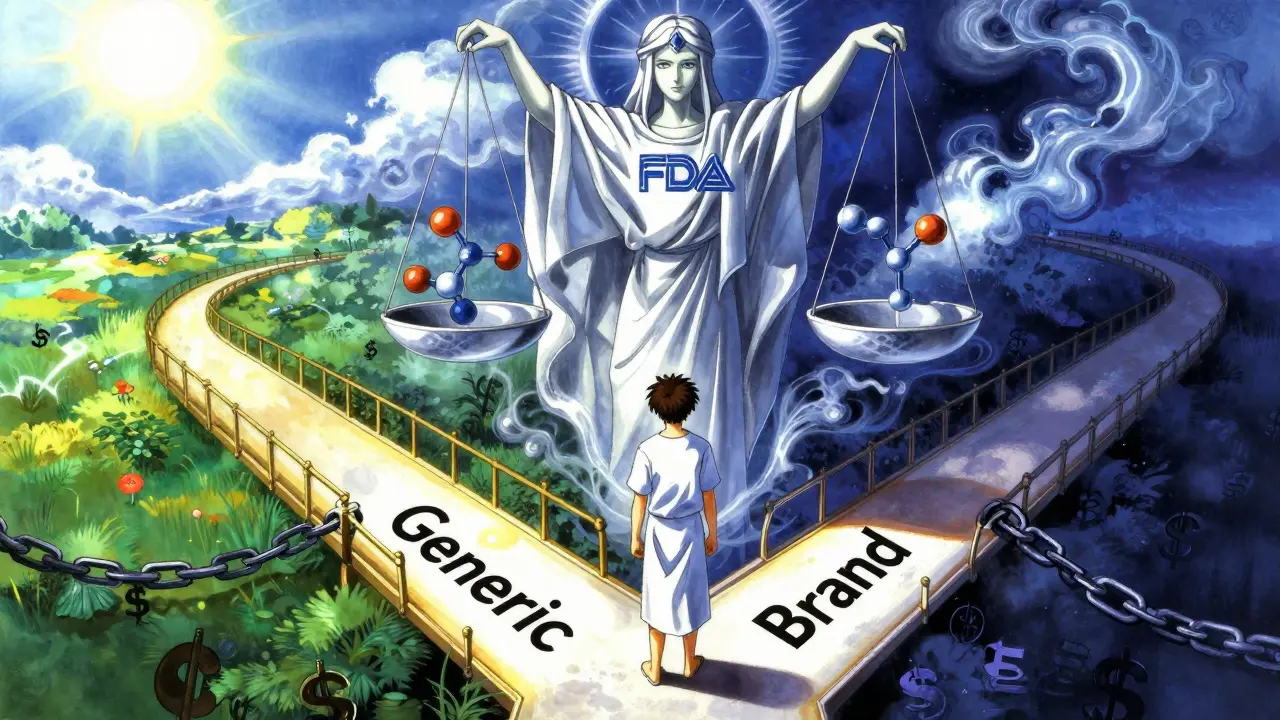
Generic drugs aren’t knockoffs. They’re not cheaper because they’re weaker or made with lower-quality ingredients. By law, they must contain the exact same active ingredient, in the same strength, and delivered the same way as the brand-name drug. If your doctor prescribes lisinopril for high blood pressure, the generic version has the same molecule, the same dose, and works the same way in your body. The FDA requires this. It’s not a suggestion-it’s a legal standard.The only differences are in the inactive ingredients: the fillers, dyes, and coatings that give the pill its shape, color, or taste. These don’t affect how the drug works. But they can make the pill look different. That’s why your generic metformin might be oval and white, while the brand version is round and green. It’s the same medicine, just dressed differently.
How the FDA Makes Sure Generics Work the Same
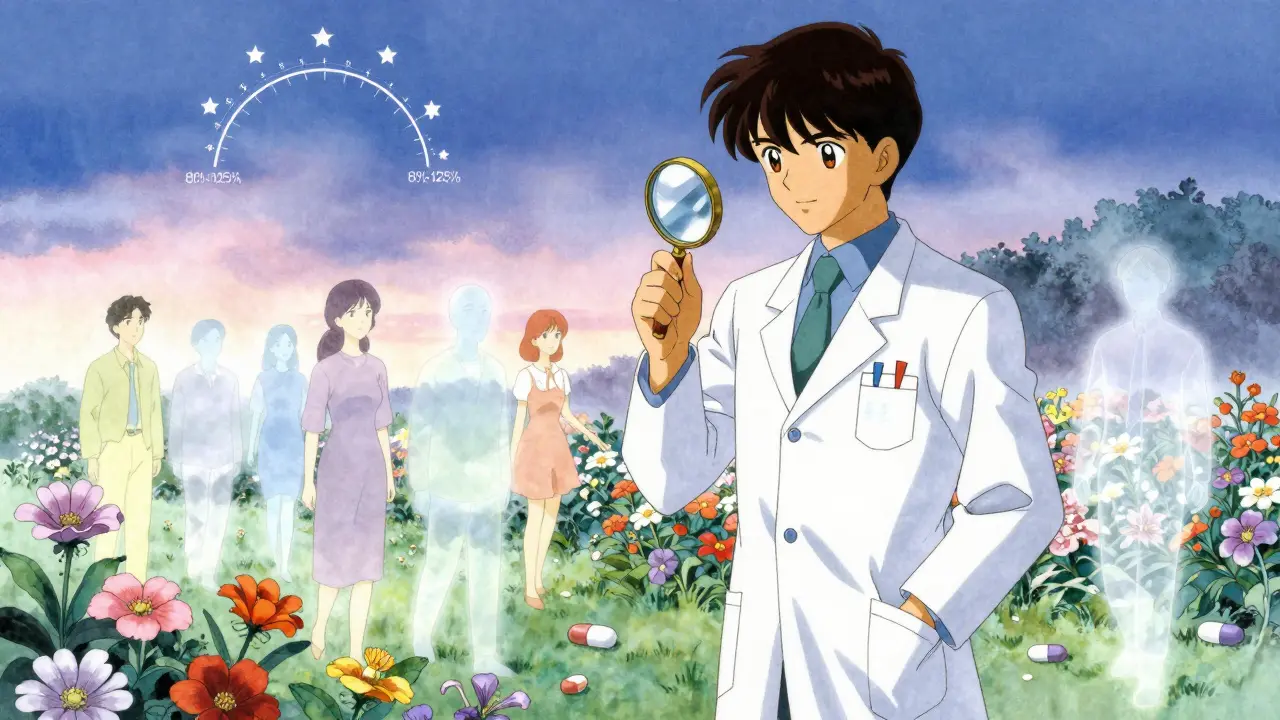
Before a generic drug hits the shelf, it goes through a strict testing process. The manufacturer must prove it’s bioequivalent to the brand-name drug. That means when you take it, your body absorbs it at nearly the same rate and to the same extent. The FDA requires the absorption levels to fall within 80% to 125% of the brand-name drug’s levels. That’s not a wide margin-it’s a tight, science-backed range designed to ensure consistent results.For most drugs, that’s more than enough. But for drugs with a narrow therapeutic index-like warfarin, levothyroxine, or certain epilepsy medications-the rules are even stricter. The absorption window tightens to 90% to 111%. These are medications where even small changes in blood levels can make a big difference. The FDA knows this, and they treat them differently.
Studies back this up. A 2019 analysis of over 3.5 million patients across 13 conditions-including diabetes, depression, and high blood pressure-found no difference in outcomes between generics and brand-name drugs. The same results showed up in studies from Austria, Canada, and the U.S. Patients taking generic versions had the same rates of hospitalization, same control of their conditions, and same survival rates.
Why Do Some People Say Generics Don’t Work for Them?
If the science says generics work the same, why do some people swear they feel worse after switching? The answer isn’t usually about the drug itself-it’s about perception, timing, or small changes in formulation.One common issue is with levothyroxine, the thyroid hormone replacement. Even though the active ingredient is identical, some patients report feeling off after switching from one generic brand to another. Why? Because different manufacturers use different fillers. One might use lactose, another might use corn starch. For someone with a mild sensitivity, that can cause bloating or digestive upset-not because the hormone isn’t working, but because their gut reacted to the new filler.
Another factor is consistency. If you switch pharmacies and get a different generic version each time, your body might be adjusting to tiny variations in absorption. That’s why doctors often recommend sticking with the same pharmacy and the same generic manufacturer if you’re on a sensitive medication.
Then there’s the psychological side. A 2022 Consumer Reports survey found that 42% of people believe generics are less effective. That belief alone can make someone feel worse-because they’re expecting to feel worse. It’s not magic. It’s the nocebo effect: when you expect a negative outcome, your brain can make it happen.
The Real Advantage: Cost Savings That Save Lives
The biggest reason generics exist isn’t just to save money-it’s to make medicine accessible. In the U.S., brand-name drugs can cost hundreds or even thousands of dollars per month. Generics? Often under $10. That’s not a small difference. It’s the difference between taking your medication every day or skipping doses because you can’t afford it.The numbers speak for themselves. Generics make up 90% of all prescriptions filled in the U.S., but they account for only 23% of total drug spending. That’s $373 billion saved every year, according to the Congressional Budget Office. That money goes back into the system-helping people afford insulin, heart meds, antidepressants, and more.
Studies show that when people switch to generics, they’re more likely to stick with their treatment. A Kaiser Family Foundation survey found that 65% of patients who switched from brand to generic because of insurance costs reported no change in how they felt. And of those who did notice side effects, 73% kept taking the generic because the cost was worth it.
When You Might Need to Stick With the Brand
Most of the time, generics are the smart choice. But there are exceptions. If you’re on a narrow therapeutic index drug-like warfarin, phenytoin, or levothyroxine-and you’ve been stable on a specific brand for years, your doctor might recommend staying on it. Not because generics are inferior, but because consistency matters more than cost in those cases.Also, if you’ve had a reaction to a specific generic version-say, a rash or stomach upset-you should report it to your pharmacist and doctor. They can check whether it was the filler, the coating, or something else. Sometimes, switching to a different generic manufacturer (not the brand) solves the problem.
And if your insurance won’t cover the brand, but you really need it? Ask your doctor for a prior authorization. Sometimes, they can argue that you’ve had a documented reaction to generics, and the brand is medically necessary.
What You Can Do to Stay Safe and Informed
You don’t need to be a pharmacist to use generics safely. Here’s what you can do:- Stick with one pharmacy. That way, they know your history and can flag if a different generic comes in.
- Check the pill’s appearance. Use the FDA’s Drugs@FDA database to look up your medication and see what it’s supposed to look like. If your pill suddenly changes color or shape, ask your pharmacist why.
- Don’t assume a new generic is worse. If you feel off after a switch, don’t just stop taking it. Call your doctor. It might be a temporary adjustment.
- Use apps like Medisafe or MyTherapy to track your pills. They can help you remember what version you’re on and when you switched.
- Ask your pharmacist. They’re trained to explain differences between brands and generics. They can tell you if a new generic is the same as your old one.
The Bottom Line: Generics Are Safe, Effective, and Necessary
The evidence is clear: generic drugs are not second-rate. They’re held to the same standards, tested the same way, and work the same way as brand-name drugs. The only real difference is the price-and the savings are massive.Yes, a tiny number of people might have issues with fillers or need to stay on a specific version. But for the vast majority, generics are the smarter, safer, and more affordable choice. They’ve helped millions of people manage chronic conditions, avoid hospitalizations, and live longer, healthier lives.
If you’re hesitant about switching, talk to your doctor or pharmacist. Don’t let fear or misinformation keep you from taking the medicine you need. The science says it’s the same. The numbers say it saves lives. And your wallet will thank you.
Are generic drugs less effective than brand-name drugs?
No. Generic drugs are required by the FDA to contain the same active ingredient, strength, dosage form, and route of administration as the brand-name version. They must also prove bioequivalence-meaning your body absorbs them at nearly the same rate and amount. Large studies involving millions of patients show no difference in effectiveness for conditions like high blood pressure, diabetes, depression, and thyroid disorders.
Why do generic pills look different from brand-name pills?
By law, generic manufacturers can’t make their pills look exactly like the brand-name version, even if they have the same active ingredient. That’s to avoid trademark infringement. So they change the color, shape, size, or coating. These differences are only in the inactive ingredients-like dyes or fillers-and don’t affect how the drug works in your body.
Can I switch between different generic versions of the same drug?
For most drugs, yes. But for medications with a narrow therapeutic index-like warfarin, levothyroxine, or seizure drugs-it’s best to stick with one manufacturer if possible. Switching between generics can sometimes cause small changes in absorption, which might affect how you feel. If you notice symptoms after switching, talk to your doctor or pharmacist.
Why are generic drugs so much cheaper?
Brand-name drug companies spend years and billions of dollars developing, testing, and marketing their drugs. Once the patent expires, other companies can make the same drug without repeating those costs. Generic manufacturers don’t need to run expensive clinical trials-they just need to prove their version works the same. That saves money, and those savings are passed on to you.
Do generic drugs come from unsafe factories?
No. The FDA inspects all manufacturing facilities-whether they’re in the U.S., India, China, or elsewhere-using the same standards. About 78% of the active ingredients in generics come from India and China, but every facility must meet U.S. quality rules. The FDA conducts regular inspections and has the power to block imports if standards aren’t met. There’s no evidence that generics from overseas are less safe.
Should I always choose the generic version?
For most people, yes. Generics are safe, effective, and save money. But if you’ve had a reaction to a specific generic, or you’re on a drug with a narrow therapeutic index and you’re stable on a brand, talk to your doctor. They can help you decide what’s best for your situation. Don’t assume generics are always the answer-but for the vast majority, they are.
Solomon Ahonsi
February 1, 2026 AT 18:18Wow, another feel-good article about generics like we’re all supposed to be grateful for being allowed to take the cheap version. Newsflash: I’ve had my blood pressure meds switch from brand to generic three times in two years, and each time I felt like a zombie for a week. The FDA’s ‘80-125% bioequivalence’ is a joke when your body notices the difference. They don’t test for how you *feel*, just how much drug is in your blood. That’s not medicine, that’s accounting.
George Firican
February 2, 2026 AT 17:22The entire discourse around generics reveals a deeper cultural anxiety about value, identity, and trust in institutions. We’ve been conditioned to equate appearance with quality-bright packaging, brand logos, premium pricing-and so when a pill looks different, our psyche interprets it as inferior, even when the pharmacokinetics are statistically identical. The nocebo effect isn’t just psychological; it’s a societal mirror reflecting our commodification of health. We don’t just buy medicine-we buy reassurance, and generics, for all their scientific parity, cannot manufacture that emotional certainty. Perhaps the real crisis isn’t efficacy-it’s our inability to separate symbolism from substance.
Matt W
February 4, 2026 AT 02:35My grandma switched to generic lisinopril last year and hasn’t had a single issue. She’s 78, lives on a fixed income, and without generics she’d be skipping doses. I get that some people feel weird after switching-maybe it’s the filler, maybe it’s stress-but don’t let anecdotal fear stop someone else from staying alive. The data’s clear: people who can afford meds take them. Generics save lives. End of story.
Anthony Massirman
February 5, 2026 AT 08:59Generic = same drug, cheaper. Stop overthinking it.
Brett MacDonald
February 6, 2026 AT 00:48so like… if the generic is the same why do they even make the brand? like… is it just marketing? or do they secretly add magic dust? i dont trust big pharma but i also dont trust the fda so… idk man
Sandeep Kumar
February 6, 2026 AT 22:24India makes 70% of the world’s generics and you think it’s safe? Your body is a lab rat for Chinese factories with no oversight. I’ve seen the videos. The pills are made in rooms with rats crawling on the floor. Americans are too lazy to care. We get what we deserve
phara don
February 7, 2026 AT 20:38So if I’m on levothyroxine and I switch from one generic to another, is it possible I’d feel off even if both are FDA-approved? Or am I just imagining it?
Bob Hynes
February 8, 2026 AT 16:30Man… I used to think generics were scam drugs till my cousin in Toronto told me his dad took generic metformin for 12 years and never had a problem. Then I checked the FDA database and saw the pills looked identical inside-just different color outside. Like a car with a new paint job but same engine. Mind blown. Now I only buy generic. Saved me $200 a month. Also, Canada’s system is way smarter than ours. Just saying.
Eli Kiseop
February 9, 2026 AT 05:38I switched to generic warfarin last year and my INR went wild for two weeks. My doctor said it was the filler. Switched back to the same generic I started with and now I’m stable. So yeah it matters which generic you get. Not all generics are equal. Just sayin
Akhona Myeki
February 9, 2026 AT 13:47It is an absolute disgrace that the United States permits the importation of pharmaceutical active ingredients from nations with inferior regulatory oversight. The notion that a pill manufactured in a facility with inadequate sanitation standards can be deemed bioequivalent is not merely scientifically dubious-it is an affront to public health. The FDA’s inspections are performative. The data is manipulated. The public is being deceived. This is not medicine. This is colonialism in pill form.
Ansley Mayson
February 10, 2026 AT 03:23Generics are fine if you’re poor. But if you can afford the brand, why risk it? The 5% variance in absorption? That’s enough to mess with someone on a narrow window drug. I’ve seen people crash after switching. The system rewards cost-cutting over care. You think that’s ethical?
Murarikar Satishwar
February 11, 2026 AT 13:07Let me tell you something from my experience as a pharmacy technician in Mumbai-generics aren’t just cheaper, they’re a lifeline. I’ve seen mothers choose between feeding their kids or buying insulin. Generics make that choice disappear. The science is solid, the manufacturing standards are monitored, and the outcomes speak louder than fear. If you’re worried about fillers, ask for the manufacturer’s name. Most pharmacies can tell you. But don’t let misinformation cost someone their life.