
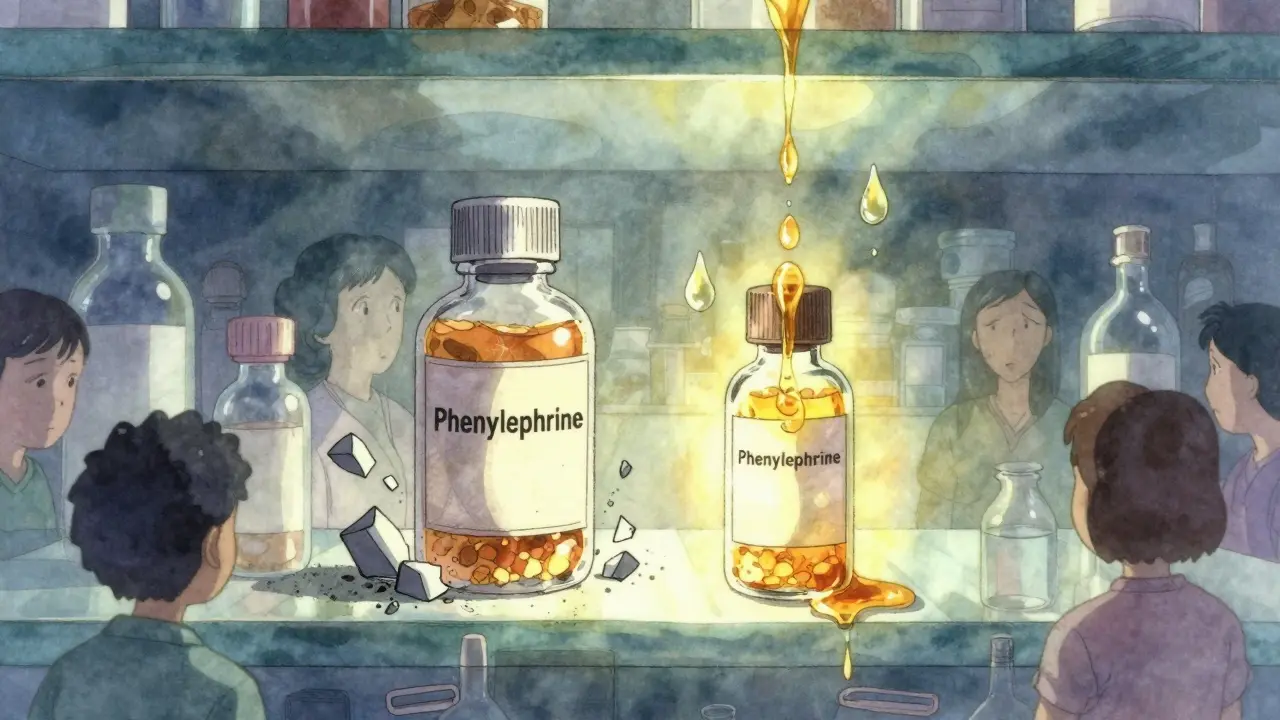

Every winter, millions of people reach for OTC cough and cold medicines hoping to feel better faster. But what if the bottle in your cabinet isn’t doing what it claims? In 2023, the FDA made a shocking move: they proposed removing phenylephrine from the list of approved OTC decongestants. Why? Because decades of research now prove it doesn’t work at the doses sold in stores. And you’re not alone if you’ve ever taken a DayQuil or Sudafed PE and felt absolutely nothing. That’s not your imagination - it’s science.
What’s in Your Cold Medicine?
Most OTC cough and cold products contain four main ingredients: decongestants, cough suppressants, expectorants, and antihistamines. Each targets a different symptom, but not all work the same way - or at all.
- Phenylephrine (10mg per dose): Marketed as a nasal decongestant in products like Sudafed PE, DayQuil, and Robitussin Cold. But studies show it’s no better than a placebo. A 2007 meta-analysis found that 10mg had zero effect on nasal congestion. Even at 25mg (which isn’t sold), the improvement was minimal and didn’t match how people actually felt.
- Pseudoephedrine (30-60mg per dose): This is the real deal. It works. But because it can be used to make methamphetamine, it’s kept behind the counter. You need ID and a limit on how much you can buy. Still, 68% of users who’ve tried both say pseudoephedrine actually clears their nose - compared to just 22% for phenylephrine.
- Dextromethorphan (15-30mg per dose): Sold as a cough suppressant. Studies are mixed. Some show slight relief in adults, but nothing consistent. In kids? No proven benefit.
- Guaifenesin (200-400mg per dose): An expectorant meant to loosen mucus. Evidence? Weak. A 2014 review of 29 trials found no clear advantage over placebo.
- Antihistamines (like diphenhydramine or chlorpheniramine): Often included for runny nose or allergies. But for a common cold? They don’t help cough. And they make you drowsy.
The bottom line? Many of the ingredients you’re paying for just aren’t doing their job. And worse - they might be putting you at risk.
Why Kids Are at Risk
Parents often reach for OTC cold medicine for their kids, thinking they’re helping. But the American Academy of Pediatrics has warned since 2007: These products don’t work in children under 6 - and they can be dangerous.
Between 2000 and 2007, 20 child deaths in the U.S. were linked to accidental overdoses of OTC cold meds. Thirteen of those kids were under two. Why? Because many products contain multiple active ingredients. A child might get one medicine for cough and another for fever - not realizing both have acetaminophen or dextromethorphan. That’s how accidental poisoning happens.
Even if you follow the dosing chart, the medicine itself may not help. A 2007 analysis in the Journal of the American Medical Association found little to no evidence that OTC cough and cold medicines make children recover faster. Yet, 73% of parents in one survey said they’ve stopped giving them to kids under 6 after hearing the warnings.
What works instead? Simple, safe, and free.
- Saline nose drops + bulb suction for babies
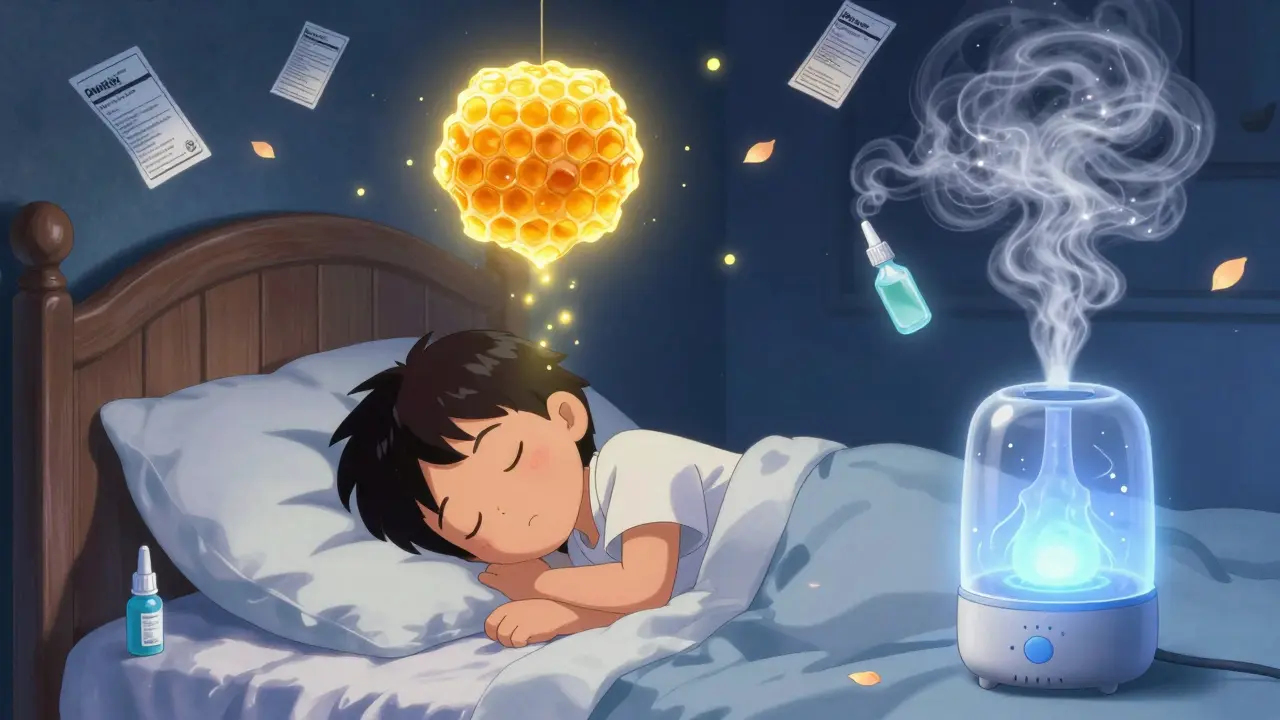
- Honey (1/2 teaspoon for kids over 12 months) - proven to reduce nighttime cough better than some OTC syrups
- Extra fluids - water, broth, or even popsicles
- A humidifier in the bedroom
There’s no magic pill. But these things? They work. And they don’t carry the risk of liver damage, seizures, or abnormal heart rhythms.
Adults Too - It’s Not Just Kids
You might think, “I’m an adult - I know what I’m doing.” But here’s the catch: OTC cold medicines are designed to be taken with other meds. And that’s where things get dangerous.
Combining a decongestant like phenylephrine or pseudoephedrine with antidepressants (like MAOIs or tricyclics) can spike your blood pressure to dangerous levels. Taking dextromethorphan with certain SSRIs? Risk of serotonin syndrome - a rare but life-threatening condition.
And don’t forget: many cold medicines contain acetaminophen. If you’re already taking Tylenol for a headache? You’re doubling your dose. That’s how liver failure happens. In 2022, over 1,000 ER visits in the U.S. were tied to accidental acetaminophen overdose - most from mixing OTC products.
One woman in Ohio took three different cold pills over three days. All had acetaminophen. She ended up in the hospital with acute liver failure. She didn’t overdose on purpose. She just didn’t read the Drug Facts label.
What’s Changing in 2025?
The FDA’s proposed removal of oral phenylephrine isn’t just a rumor - it’s happening. If finalized (expected by late 2024), manufacturers will have until Q3 2025 to reformulate their products. That means:
- DayQuil, NyQuil, and similar brands will replace phenylephrine with pseudoephedrine - or remove decongestants entirely.
- Shelves will have two versions: old (with phenylephrine) and new (without).
- Price may go up. Pseudoephedrine costs more to stock because of its restricted sales.
Consumer Reports found that 63% of Americans would switch to alternatives if they knew phenylephrine doesn’t work. That’s a huge shift. And it’s already happening. Sales of honey-based cough syrups grew 12.7% last year. Saline nasal sprays are now outselling oral decongestants in some pharmacies.
What Should You Actually Use?
Forget the flashy packaging. Here’s what science says works - for adults and kids:
For Congestion:
- Saline nasal spray (no drug needed)
- Nasal decongestant sprays (oxymetazoline - use only 3 days max)
- Pseudoephedrine (behind the counter - ask for it)
For Cough:
- Honey (for kids over 12 months and adults)
- Warm tea with lemon and honey
- Staying hydrated - thin mucus, ease throat irritation
For Runny Nose:
- Saline rinses (neti pot or spray)
- Tissues with lotion - saves raw noses
And skip the multi-symptom formulas. They’re designed to sell more pills, not treat you better. If you have a cough, get a cough medicine. If you have congestion, get a decongestant. Don’t take five things at once.

How to Read a Drug Facts Label
Here’s your cheat sheet for reading the label - before you take anything:
- Look for the Active Ingredients section. List them.
- Check if you’re already taking something with the same ingredient (like acetaminophen).
- Read the Warnings. If it says “do not take with MAOIs” or “may cause drowsiness,” pay attention.
- Check the Dosage. More isn’t better. Taking two pills because “it didn’t work” is how overdoses happen.
- Look at the Expiration Date. Old medicine can lose potency - or become harmful.
Pro tip: Take a photo of the label with your phone. It helps if you need to show a pharmacist or doctor later.
What’s Next?
The era of blind trust in OTC cold medicine is ending. The science is clear: many products on the shelf today are more marketing than medicine. The FDA’s move isn’t about removing safe drugs - it’s about removing ineffective ones.
As a result, we’re seeing a quiet revolution in how people manage colds. More are turning to saline sprays. More are keeping honey in the pantry. More are reading labels before they buy.
And that’s the real win. Not a pill that doesn’t work - but a smarter way to feel better.