
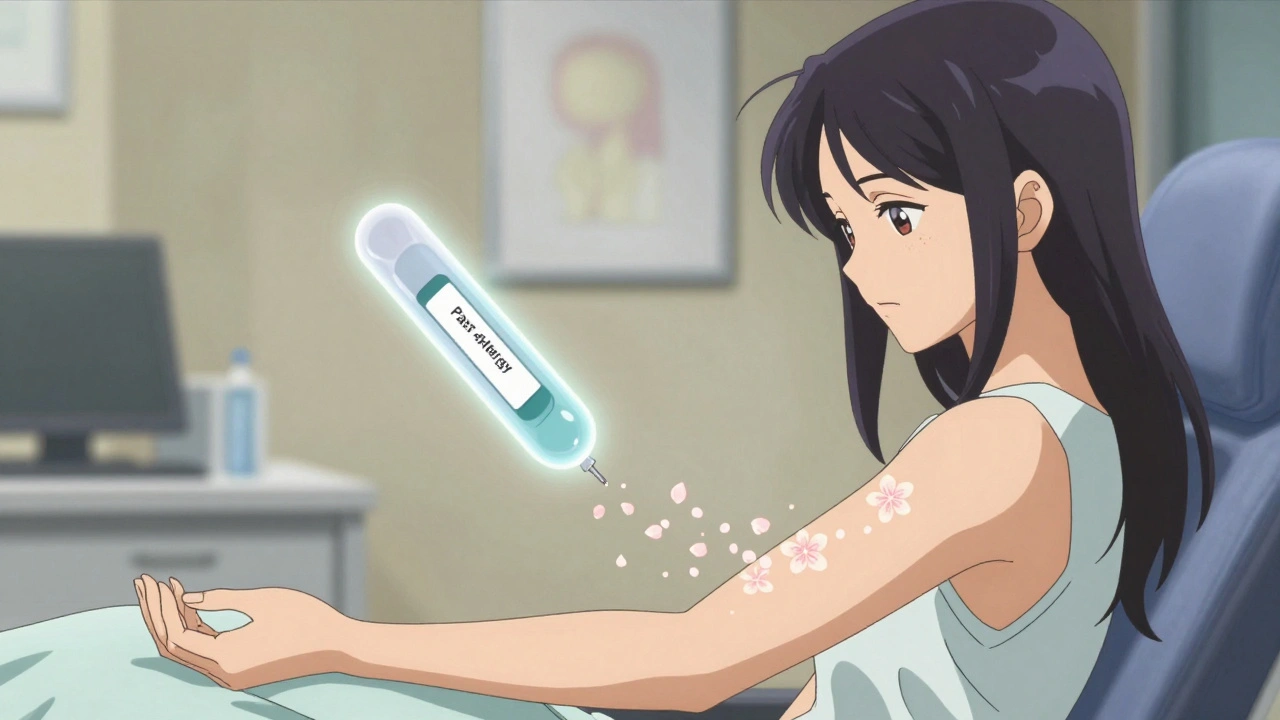

More than 1 in 10 people say they’re allergic to penicillin. But here’s the twist: 95% of them aren’t. That’s not a typo. A rash you got as a kid after taking amoxicillin for an ear infection? It might not have been an allergy at all. Yet that label sticks-through every hospital visit, every prescription, every emergency room trip-long after it’s out of date. And it’s costing you more than just inconvenience. It’s costing you better care.
What’s Really Going On When You Say You’re Allergic?
A true drug allergy isn’t just a stomach ache or a headache. It’s your immune system going into overdrive, treating a harmless drug like a dangerous invader. That means symptoms like hives, swelling, trouble breathing, or anaphylaxis-the kind that drops your blood pressure and shuts down your airway. These are rare. Most reactions people call "allergies" are just side effects: nausea, dizziness, a mild rash that fades. The CDC says only about 1 in 10 reported penicillin allergies are real IgE-mediated allergies. The rest? Misdiagnosed, forgotten, or misunderstood.That’s why documentation matters so much. If your chart just says "Penicillin Allergy," without the date, the symptoms, or how many doses you took, doctors have no choice but to assume the worst. They’ll avoid penicillin-and reach for something broader, costlier, and riskier. That’s not caution. That’s guesswork.
Why Penicillin Gets the Wrong Reputation
Penicillin is the most common drug allergy people report. But here’s the thing: it’s also one of the safest and most effective antibiotics ever made. For strep throat, syphilis, pneumonia, and many infections, nothing beats it. And here’s the kicker: if you were labeled allergic as a child, you’re likely not allergic anymore. Studies show that 80% of people who had a penicillin reaction in childhood lose their sensitivity within 10 years.Yet most people never get retested. Why? Because no one told them to. Or because their old records follow them like a shadow. One patient in a 2021 study had a childhood rash from age 6. At 38, she still got clindamycin for every infection-even though it gave her diarrhea and made her sick. After testing, she was cleared. Now she takes amoxicillin. No more side effects. No more confusion. Just better treatment.
What About Other Antibiotics? Cross-Reactivity Explained
If you’re allergic to penicillin, does that mean you can’t take cephalosporins like ceftriaxone or cephalexin? The old answer was yes. The new answer? Almost never.For decades, doctors assumed a 10% cross-reactivity risk between penicillin and cephalosporins. Modern data shows it’s closer to 1-2%. That’s not a risk-it’s a myth. The same goes for carbapenems and monobactams. Unless you had a severe reaction like anaphylaxis, you’re likely safe. The CDC updated its guidelines in 2022 to reflect this. Skin testing and oral challenges now confirm safety in most cases, even for patients with a history of mild reactions.
That doesn’t mean you should self-test. But it does mean you shouldn’t automatically avoid all beta-lactam antibiotics just because you’ve been told you’re allergic to penicillin. Ask your doctor: "Was this a true allergy? Or just a side effect?"

What Are the Safe Alternatives?
If you truly have a confirmed penicillin allergy-or you’re not ready to be tested-there are still good options. But they come with trade-offs.- Macrolides like azithromycin and clarithromycin: Effective for respiratory infections, but more expensive ($25 for a 5-day course vs. $4 for penicillin). They can cause stomach upset and may increase antibiotic resistance.
- Tetracyclines like doxycycline: Great for acne, Lyme disease, and some skin infections. But not for kids under 8 or pregnant women.
- Fluoroquinolones like levofloxacin: Broad-spectrum, powerful. But linked to tendon damage, nerve issues, and heart rhythm problems. Reserved for serious infections when nothing else works.
- Vancomycin: Used for MRSA and severe infections. Needs IV delivery. Can damage kidneys. Not a go-to for simple infections.
These aren’t bad drugs. But they’re not better than penicillin. They’re backups. And using them unnecessarily? That’s what drives antibiotic resistance. The CDC estimates that mislabeled penicillin allergies lead to 50,000 extra courses of broad-spectrum antibiotics every year in the U.S. alone. That’s not just a cost issue-it’s a public health crisis.
How to Get Tested-and Why It’s Easier Than You Think
Allergy testing for penicillin isn’t complicated. It’s two steps:- Skin test: A tiny drop of penicillin and its breakdown products is placed under your skin. If you’re allergic, you’ll get a raised bump within 15-20 minutes.
- Oral challenge: If the skin test is negative, you take a small dose of penicillin under supervision. If nothing happens, you’re cleared.
This isn’t a hospital-only procedure anymore. More clinics, including primary care offices, are starting to offer it. The process takes less than two hours. No needles, no overnight stay. Just a simple, safe way to remove a lifetime label.
And if you’ve had a severe reaction in the past? Desensitization is an option. It’s done in a hospital over several hours, with doses slowly increasing. Success rates? Over 80%. It’s used for people with syphilis during pregnancy, or those needing penicillin for life-threatening infections. It’s not for everyone-but it’s available when you need it.

What You Need to Do Right Now
You don’t need to wait for a doctor to bring it up. Here’s your action plan:- Check your records. Look at your electronic health record. Does it say "penicillin allergy" without details? Request a review.
- Write it down. What happened? When? Was it a rash? Swelling? Trouble breathing? Did you get sick after one pill or ten? Write the exact reaction.
- Ask your doctor. Say: "I think I might have been mislabeled. Can we check?"
- Carry a card. The Cleveland Clinic recommends a wallet card listing your confirmed allergies, the reaction, and the date. Keep it with your ID.
- Don’t assume. If you were told you’re allergic because you got a rash as a kid, you probably aren’t. But don’t guess-get tested.
The Bigger Picture: Why This Matters Beyond You
This isn’t just about avoiding a rash. It’s about smarter medicine. When you’re mislabeled, you get costlier drugs. Longer hospital stays. Higher risk of deadly infections like C. diff. Studies show patients with fake penicillin allergies have a 40% higher chance of getting C. diff. That’s not coincidence. It’s a direct result of using broader-spectrum antibiotics.Hospitals that implement allergy evaluation programs save money-$3.50 for every $1 spent. They reduce antibiotic resistance. They improve outcomes. The American Academy of Allergy, Asthma & Immunology launched the "Choose Penicillin" initiative in 2023 to fix this. Twelve pilot hospitals cut unnecessary alternative antibiotic use by 65% in just six months.
And the movement is growing. By 2027, half of all penicillin allergy evaluations will happen in primary care clinics-not just allergy specialists. That’s progress. But it won’t happen unless patients speak up.
Final Thought: Your Allergy Label Doesn’t Define You
You’re not "the person allergic to penicillin." You’re someone who had a reaction once-and maybe it wasn’t even an allergy. You deserve the best treatment, not the safest guess. You deserve to know the truth. And you have the power to ask for it.Don’t let an old label hold you back. Get the facts. Get tested. Take back your health.
Can you outgrow a penicillin allergy?
Yes, most people do. Studies show that 80% of people who had a penicillin reaction as a child lose their sensitivity within 10 years. Even if you were told you’re allergic decades ago, you may no longer be. Skin testing and oral challenges can confirm whether you’ve outgrown it.
Is a rash always a sign of a true drug allergy?
No. Many rashes after taking antibiotics are not allergic reactions-they’re side effects. Only about 10% of reported penicillin "allergies" involve true IgE-mediated immune responses. A mild, non-itchy rash without swelling, breathing trouble, or fever is unlikely to be a real allergy. But always check with a doctor before assuming.
Can I take cephalosporins if I’m allergic to penicillin?
Most people can. The risk of cross-reactivity between penicillin and third-generation cephalosporins like ceftriaxone is now known to be only 1-2%, not the old 10% myth. If your allergy was mild or unclear, you’re likely safe. Skin testing can confirm this before you take the drug.
What’s the difference between an allergy and a side effect?
An allergy involves your immune system reacting to the drug, often with hives, swelling, trouble breathing, or anaphylaxis. Side effects are predictable, non-immune reactions like nausea, dizziness, or diarrhea. Side effects can be unpleasant but aren’t dangerous in the same way. Only immune reactions count as true allergies.
How much does penicillin allergy testing cost?
Testing typically costs between $150 and $400, depending on your location and insurance. Many insurance plans cover it, especially if you’ve had a reaction or are being prescribed an alternative antibiotic. The long-term savings-avoiding expensive drugs, shorter hospital stays, and fewer infections-far outweigh the cost.
What should I do if my allergy is still listed after being cleared?
Request an update to your electronic health record. Bring your test results to every doctor’s appointment. Ask your pharmacist to note the change. If your record isn’t updated, you’ll keep getting the wrong prescriptions. Don’t let outdated records put your health at risk.
Are there any risks to allergy testing?
Testing is very safe when done by trained professionals. Skin tests use tiny amounts of allergens and rarely cause reactions. Oral challenges are done under supervision with emergency equipment on hand. Severe reactions during testing are extremely rare. The risk of testing is far lower than the risk of using inappropriate antibiotics.
Can I get tested if I’ve had anaphylaxis in the past?
It depends. If your anaphylaxis was recent (within the last 5-10 years), skin testing may be avoided in outpatient settings. But desensitization-under strict hospital supervision-is still an option if you need penicillin. Talk to an allergist. They’ll assess your risk and recommend the safest path.
Evelyn Pastrana
December 7, 2025 AT 21:10So let me get this straight-I had a rash at 7, got labeled allergic for life, and now I’m paying $30 for azithromycin while penicillin sits there like a $4 hero waiting for me to stop being dumb? 🤦♀️
Maria Elisha
December 9, 2025 AT 16:56Ugh I just read this and realized my chart still says ‘penicillin allergy’ from when I got a rash after amoxicillin in 2010. I didn’t even remember that. I’m just gonna ignore it until I get sick again lol.
Raja Herbal
December 11, 2025 AT 02:25Wow. So the real allergy is to thinking. You get a rash, someone scribbles ‘allergy’ in your chart, and now you’re stuck with drugs that make you vomit while the good stuff sits in the pharmacy like a jealous ex. Classic. I’m from India-we don’t even have penicillin shortages, but we still treat patients like they’re radioactive. 😅
Angela R. Cartes
December 12, 2025 AT 01:30Ok but like… why is this even a thing? 🤨 I mean, if you got a rash from a 5-day course of amoxicillin at age 4, are you really gonna die if you take it again? Or is this just medical bureaucracy playing Jenga with our health? 🤷♀️
Asset Finance Komrade
December 12, 2025 AT 21:43It’s not about penicillin. It’s about the epistemological collapse of medical authority. We outsource our bodily autonomy to algorithmic records that outlive our lived experience. The rash? A symptom of a deeper systemic failure. 🌱
Carina M
December 12, 2025 AT 23:51It is profoundly irresponsible to suggest that laypersons should self-diagnose or self-advocate regarding immunological hypersensitivity. The potential for catastrophic adverse events far outweighs the marginal benefit of reducing antibiotic costs. This is not a consumer choice-it is a clinical imperative that must remain under the purview of certified allergists.
Andrea Beilstein
December 13, 2025 AT 03:48we think we know things but we dont we just inherit labels like heirlooms and never ask if they still fit
my grandma had a rash from sulfa in 1953 and now my cousin cant take any antibiotic because of it
who wrote that rule anyway
om guru
December 13, 2025 AT 08:43Penicillin allergy documentation must be reviewed systematically by primary care physicians with standardized protocols. Patient education is essential. Institutions must integrate allergy re-evaluation into routine care. This is not optional. It is standard of care.
Shubham Mathur
December 15, 2025 AT 04:21STOP letting hospitals ghost you with outdated labels. I had a rash at 10, got tested at 28, turned out I’m fine-now I take amoxicillin like a boss. If you’re still scared, go get tested. It’s 2 hours. Not a lifetime sentence. Your doctor isn’t gonna do it for you. Do it yourself. Now.
Jennifer Blandford
December 16, 2025 AT 23:00Just got my test results back-NO allergy. I cried. Not because I’m dramatic (ok maybe a little) but because I spent 15 years taking drugs that made me feel like a zombie. Now I can eat pizza after antibiotics again. 🍕❤️ Thank you for writing this. I’m telling everyone.