
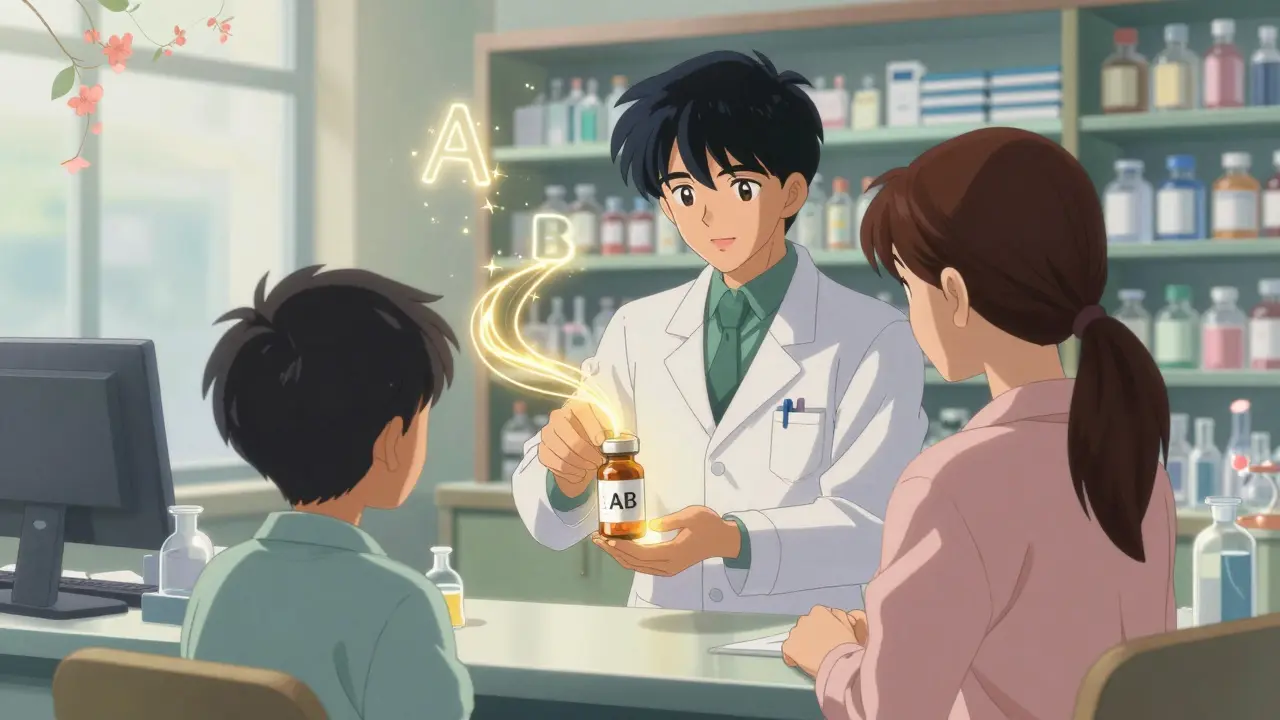

When you pick up a prescription at the pharmacy, you might not think about whether the pill in your hand is the exact same as the one your doctor prescribed. But behind the scenes, a strict system is in place to make sure it is. This system is called therapeutic equivalence codes, and it’s how the U.S. Food and Drug Administration (FDA) decides which generic drugs can be swapped in for brand-name medications without changing how well they work or how safe they are.
It’s not enough for a generic drug to have the same active ingredient. It has to perform the same way in your body. That’s where the Orange Book comes in. Officially named Approved Drug Products with Therapeutic Equivalence Evaluations, this public database has been the FDA’s go-to reference since 1980. Every generic drug that’s been approved gets a code-usually one or two letters-that tells pharmacists and doctors whether it’s safe to substitute.
What Do the Letters Mean?
The code starts with a single letter: A or B. If it’s an A, the drug is considered therapeutically equivalent to the brand-name version. That means it can be swapped without any concerns. If it’s a B, the FDA says more information is needed. It doesn’t mean the drug is unsafe-it just means the evidence isn’t clear enough yet to guarantee it works exactly the same.
But the A rating has more detail. For example:
- AB means the drug has passed bioequivalence testing. This is the most common rating. Most simple pills-like antibiotics or blood pressure meds-fall into this category.
- AB1, AB2, AB3, AB4 are used when there’s more than one brand-name drug as a reference. If your doctor prescribes one brand, but the pharmacy has a generic that matches a different brand, these numbers help match the right one.
Now, the B codes are trickier. They tell you why the drug hasn’t been cleared for automatic substitution:
- BC = Extended-release tablets or capsules where the release pattern might differ.
- BD = Known bioequivalence problems in the past.
- BE = Delayed-release products like enteric-coated pills.
- BT = Topical creams or ointments where absorption is hard to measure.
- BN = Inhalers or nebulizer products.
- BX = Not enough data to make a call.
These aren’t random labels. Each one comes from real data. For example, a cream that treats eczema might have the same ingredients as the brand, but if the base (the non-active part) is different, it might not absorb the same way into the skin. That’s why it gets a BT code.
Why This Matters in Real Life
Imagine a pharmacist filling a prescription for a generic version of a cholesterol drug. The label says “Atorvastatin 20 mg.” The pharmacist checks the Orange Book and sees the code is AB. That means they can legally substitute it without asking the doctor. In 49 U.S. states, that’s allowed by law.
But if the code is BC, the pharmacist can’t just swap it. They might call the doctor. Or they might check if the patient has had problems with other extended-release versions before. In 38 states, pharmacists are required to notify the prescriber if they’re substituting a B-rated drug.
According to a 2022 survey by the National Community Pharmacists Association, 87% of pharmacists say TE codes make their job easier. They check the Orange Book at least once a week. That’s not just routine-it’s critical. A single mistake could mean a patient gets a drug that doesn’t work as well.
And it saves money. Generic drugs make up 90% of all prescriptions filled in the U.S., but only cost 23% of what brand-name drugs do. In 2023, that added up to $370 billion in savings. The TE code system is what makes that possible. Without it, pharmacies couldn’t confidently swap drugs. Doctors wouldn’t trust substitutions. Patients would pay more.

The Hidden Problems
For simple pills-like tablets you swallow-the system works incredibly well. Bioequivalence studies are straightforward: measure how much of the drug enters the bloodstream and how fast. If it matches the brand within a narrow range, it gets an A.
But not all drugs are that simple.
Take inhalers. A generic asthma inhaler might have the same active ingredient and dose, but if the propellant or nozzle design is slightly different, the way the medicine reaches the lungs could change. That’s why many get a BN code-even if they’re clinically effective. The same goes for topical creams, injectables, and suppositories. The current testing methods just don’t capture how the drug behaves in the body.
Dr. Duxin Sun from the University of Michigan pointed out in 2022 that these codes can mislead. A BT-rated cream might be just as good as the brand, but because the FDA can’t prove bioequivalence with current tools, it’s stuck with a B. That leads to confusion. A 2022 American Medical Association survey found that 42% of physicians didn’t understand what a B code meant. Some thought it meant “unsafe.” Others refused to allow substitution even when the patient had used the generic without issues.
And then there’s the problem of multiple reference drugs. If a generic matches Brand A, but the doctor prescribed Brand B, and Brand A and Brand B aren’t equivalent to each other, the pharmacist can’t substitute-even if the generic is AB-rated. That’s why you see AB1, AB2, etc. It’s complicated, and it’s not always clear to patients or even some providers.
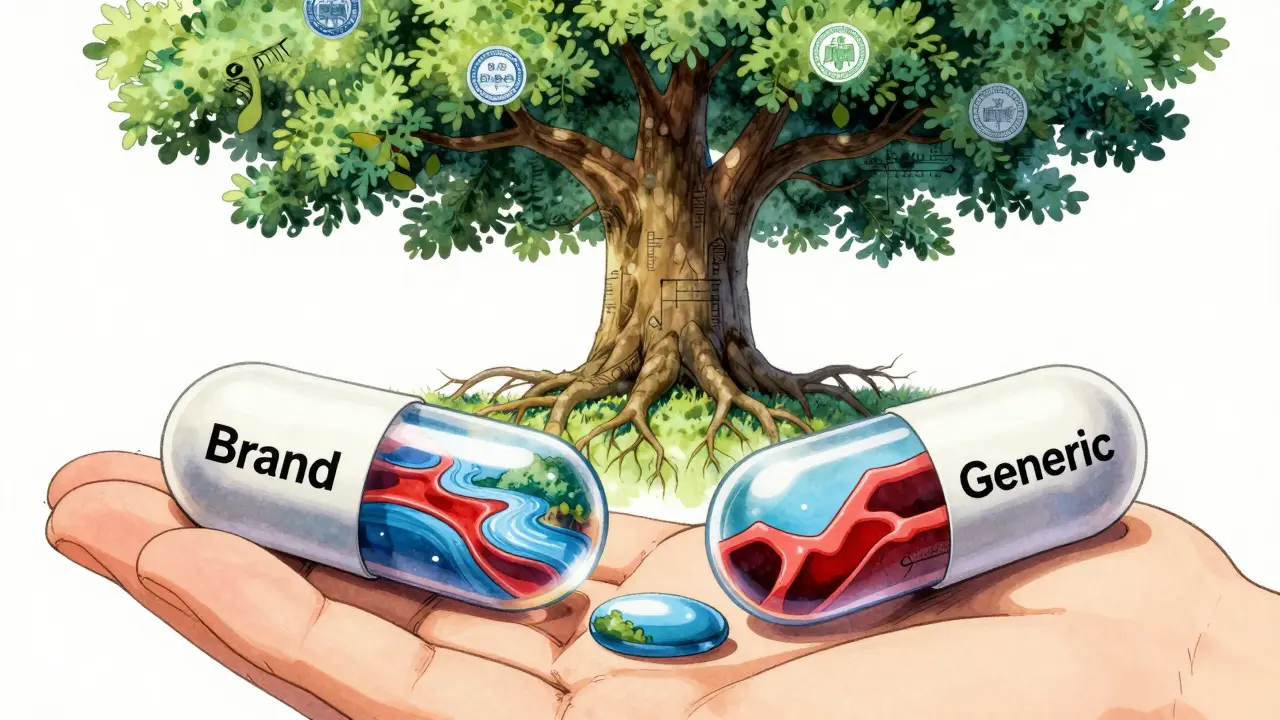
What’s Changing?
The FDA knows the system isn’t perfect. In 2022, they released a draft guidance to update how they evaluate complex drugs. They’re working on better ways to test inhalers, creams, and injectables-using methods beyond just blood levels. They’re also expanding their Product-Specific Guidances (PSGs) to 1,850 documents as of August 2023. These are detailed roadmaps for manufacturers to prove bioequivalence for specific drugs.
The goal? Reduce the number of B-rated products for complex generics by 30% by 2027. That’s ambitious. But it’s necessary. As more complex drugs go generic-like biologics and long-acting injectables-the old system just won’t cut it.
Right now, about 90% of the 14,000 products listed in the Orange Book have an A rating. That’s impressive. But the remaining 10%? Those are the hardest cases. And they’re growing. Between 2018 and 2022, B-rated applications for complex generics rose 22%.
What Should You Do?
If you’re a patient: don’t panic if your generic has a B code. Talk to your pharmacist or doctor. Ask if it’s safe for you. Many B-rated drugs are perfectly fine-they just haven’t been officially cleared for automatic substitution.
If you’re a pharmacist: always check the Orange Book before substituting. Don’t assume a generic is interchangeable just because it’s cheaper. Use the code. If it’s B, follow your state’s rules. Some require notification. Some require consent. Know your laws.
If you’re a prescriber: understand what the codes mean. If a patient’s prescription says “generic,” but the code is B, don’t automatically assume it’s a problem. Ask for clarification. The FDA’s system is meant to guide-not dictate-clinical decisions.
The bottom line? Therapeutic equivalence codes are the backbone of affordable medicine in the U.S. They’re not perfect, but they’re the best system we have. And they’re getting better.
What does an AB code mean on a generic drug?
An AB code means the generic drug has been proven to be therapeutically equivalent to the brand-name version. It has the same active ingredient, strength, dosage form, and route of administration, and has passed bioequivalence testing-meaning it delivers the same amount of medicine into your bloodstream at the same rate as the brand. Pharmacists can legally substitute AB-rated drugs without needing permission from the prescriber in most states.
Can a drug with a B code still be used instead of the brand?
Yes, but it requires more caution. A B code doesn’t mean the drug is unsafe or ineffective. It means the FDA hasn’t confirmed that it’s interchangeable with the brand under all conditions. For example, a B-rated topical cream might work just as well for many patients. But because bioequivalence testing is harder for creams, the FDA can’t guarantee it for everyone. Your doctor may still prescribe it, and your pharmacist may fill it-but they should check with you and your prescriber first.
Why do some generic drugs have different AB numbers like AB1 and AB2?
When there’s more than one brand-name drug approved as a reference for the same generic, the FDA assigns different AB numbers to match them. For example, if Generic X is bioequivalent to Brand A (AB1) and Brand B (AB2), but Brand A and Brand B are not equivalent to each other, then Generic X can only be substituted for the brand it matches. This prevents accidental substitutions that could lead to differences in how the drug works.
Are over-the-counter (OTC) drugs given therapeutic equivalence codes?
No. The FDA’s therapeutic equivalence system only applies to prescription drugs. OTC medications, like pain relievers or antacids, are not assigned TE codes. This is because they’re not subject to the same substitution rules as prescription drugs. Pharmacists can still substitute OTC products based on label claims, but they don’t rely on the Orange Book for guidance.
How often is the Orange Book updated?
The Orange Book is updated monthly. New drug approvals, code changes, and withdrawals are published each month. Pharmacists and prescribers are encouraged to check the online version regularly, as a drug’s TE code can change if new data emerges-for example, if a previously B-rated product later proves bioequivalent and gets upgraded to an A rating.