


When a woman is pregnant and struggling with chronic pain, anxiety, or seizures, the question isn’t just gabapentin pregnancy safety-it’s what’s the real risk? Gabapentin and pregabalin, often called gabapentinoids, are prescribed more than ever during pregnancy. In the U.S., nearly 1 in 25 pregnant women now takes one of these drugs, mostly for nerve pain. But are they safe for the baby? The answer isn’t simple. It’s not a clear yes or no. It’s a careful weighing of what we know, what we don’t, and what matters most to the person carrying the baby.
What Gabapentinoids Actually Do in the Body
Gabapentin and pregabalin work by calming overactive nerves. They were originally made for epilepsy, but doctors now use them for fibromyalgia, sciatica, anxiety, and even restless legs. They’re not opioids, so they don’t cause the same kind of addiction or withdrawal in newborns. But they do cross the placenta. Studies show they reach the baby’s bloodstream and even the brain. That’s not unusual-many medications do. But here’s the catch: the baby’s developing nervous system is extremely sensitive. Even small changes can have long-term effects.
Gabapentin is small, water-soluble, and gets absorbed quickly. Peak levels hit in 2 to 3 hours after a dose. That means if a mom takes it three times a day, the baby is constantly exposed. Pregabalin works faster and lasts longer, which might sound better-but it also means more consistent exposure. Neither drug is broken down by the liver. Instead, the kidneys flush them out. That’s why doctors adjust doses in late pregnancy: as blood volume increases, the body clears them faster, meaning moms might need higher doses to stay in range. But higher doses mean more drug reaching the baby.
The Big Picture: Birth Defects
One of the biggest fears is major birth defects-things like heart problems, cleft palate, or spinal defects. Early studies gave mixed signals. Some suggested a small increase. Others didn’t find anything. Then came the 2020 study in PLOS Medicine, tracking over 1.7 million pregnancies. That’s the gold standard. It found gabapentin didn’t raise the overall risk of major birth defects. The rate was 3.2% in babies exposed to gabapentin versus 3.0% in those not exposed. That’s a tiny difference.
But here’s the part that changed how doctors think: heart defects. Specifically, conotruncal defects-a group of serious heart problems affecting how blood flows out of the heart. The study found a 40% higher risk when gabapentin was taken regularly (two or more prescriptions). That sounds scary, but the absolute risk? Only 0.82% compared to 0.59% in unexposed pregnancies. So while the relative risk went up, the actual number of affected babies is still low. Still, for a family with a history of heart defects or a high-risk pregnancy, that 0.23% increase matters.
Pregabalin has fewer studies, but animal data shows clear developmental harm. The European Medicines Agency now says pregabalin should be avoided in pregnancy unless there’s no other option. In the U.S., both drugs are still labeled “Category C”-meaning risk can’t be ruled out. That’s not a warning to stop. It’s a call to be careful.
Preterm Birth and Low Birth Weight
The 2020 study didn’t just look at birth defects. It also tracked outcomes like when the baby was born and how much they weighed. The results were harder to ignore. Women taking gabapentin were 34% more likely to deliver early. They were 22% more likely to have a baby smaller than expected for their gestational age. These aren’t minor issues. Preterm birth is the leading cause of newborn death and long-term disability. Small babies face breathing problems, feeding difficulties, and developmental delays.
Why does this happen? We don’t fully know. Gabapentin affects neurotransmitters like GABA, which play a role in uterine contractions and placental function. It might interfere with the body’s natural timing for labor. Or it could be that women taking gabapentin have more underlying health issues-chronic pain, depression, or neurological conditions-that themselves raise the risk. The study tried to adjust for these, but it’s impossible to account for everything.
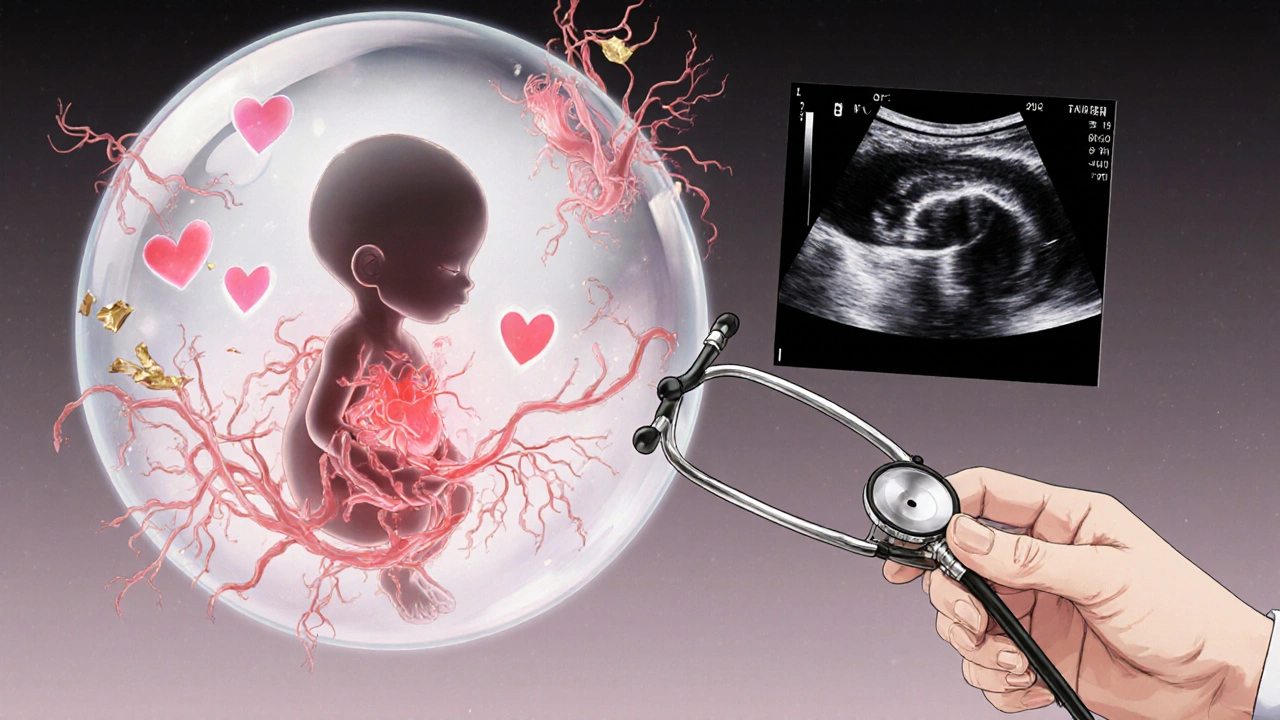
Neonatal Adaptation Syndrome: The Hidden Risk
Here’s something many doctors still don’t talk about: newborns exposed to gabapentin near delivery can have withdrawal-like symptoms. Not as severe as opioid withdrawal, but real. A 2018 study in Neurology followed 209 pregnant women on gabapentin. Of the 61 babies exposed until birth, 37.7% ended up in the NICU. Only 2.9% of babies not exposed did. That’s more than a 12-fold difference.
What did these babies show? Tremors, jitteriness, trouble feeding, irritability, and breathing problems. Some needed oxygen support. Others couldn’t latch onto the breast. In 20% of cases, symptoms lasted more than a week. This isn’t addiction. It’s the baby’s nervous system adjusting to life outside the womb after being constantly bathed in the drug. It’s called neonatal adaptation syndrome. It’s not fatal, but it’s stressful-for the baby, the parents, and the hospital.
And here’s the kicker: this risk is highest when gabapentin is taken in the last few weeks of pregnancy. If a mom stops it before 36 weeks, the risk drops sharply. But stopping suddenly can cause seizures or rebound pain. So it’s not as simple as just quitting.
What Do Experts Actually Recommend?
There’s no official green light. No one says, “Take it freely.” But there’s also no blanket ban. The American College of Obstetricians and Gynecologists (ACOG) says use gabapentin only if non-drug options have failed and the condition is severe. That means: if you have debilitating nerve pain that keeps you from walking, sleeping, or caring for yourself, and nothing else works-then gabapentin might be the least bad option.
Dr. Lori Altshuler from UCLA puts it bluntly: “We’re not talking about headaches or mild back pain. We’re talking about pain that stops someone from living.” The Society of Obstetricians and Gynaecologists of Canada surveyed 157 doctors. Thirty-two percent said they’d still prescribe gabapentin in pregnancy-for the right patient, with the right support.
What does that look like in practice? It means:
- Starting with the lowest effective dose
- Avoiding pregabalin if possible
- Stopping or tapering off by 36 weeks if safe
- Planning for NICU support at delivery
- Doing a detailed fetal echocardiogram around 20 weeks
And it means talking about alternatives. Physical therapy, acupuncture, cognitive behavioral therapy, or even non-gabapentinoid pain meds like duloxetine (which has better safety data) might be better choices. For anxiety, talk therapy or SSRIs like sertraline often work better and have more proven safety records.

What’s Coming Next?
The FDA just required all gabapentinoid makers to track 5,000 pregnancy outcomes by 2027. That’s huge. Right now, most data comes from insurance claims and hospital records. Those are good, but they miss details. The next phase is direct follow-up. The NIH is funding a study tracking 1,200 children exposed to gabapentin from birth to age 5. Are they hitting milestones? Do they have learning delays? Behavioral issues? Autism? We won’t know until 2025-2026, but the answers will change everything.
Meanwhile, pregabalin use in pregnancy is already dropping. Hospitals are updating guidelines. More OB-GYNs are talking to neurologists and pain specialists before prescribing. And more women are asking questions. That’s progress.
What Should You Do If You’re Pregnant and Taking Gabapentin?
If you’re reading this and you’re on gabapentin or pregabalin, don’t panic. Don’t stop cold turkey. Do this:
- Call your doctor. Don’t wait for your next appointment. Tell them you’re pregnant or planning to be.
- Ask: “Is this still the best option for me right now?”
- Ask: “Can we try to lower the dose? Can we switch to something else?”
- Ask: “Should I get a fetal echocardiogram?”
- Ask: “What happens if I stop? What happens if I keep going?”
There’s no perfect choice. But there is an informed one. And that’s what matters.
Is gabapentin safe to take while pregnant?
Gabapentin is not considered completely safe during pregnancy, but it’s not the most dangerous option either. Large studies show it doesn’t significantly increase the overall risk of major birth defects. However, it’s linked to a higher chance of preterm birth, low birth weight, and neonatal withdrawal symptoms. There’s also a small but real increased risk of specific heart defects when taken regularly. Doctors recommend it only when other treatments have failed and the benefits clearly outweigh the risks.
Can gabapentin cause birth defects?
The overall risk of major birth defects is very low-about 3.2% for babies exposed to gabapentin versus 3.0% in unexposed pregnancies. But there is a small increased risk (about 40% higher) for a specific group of heart defects called conotruncal defects. This means 1 in 120 babies exposed to consistent gabapentin use may be affected, compared to 1 in 170 in the general population. It’s rare, but serious enough that doctors now recommend a detailed fetal heart scan around 20 weeks if gabapentin is used during pregnancy.
What are the risks of taking gabapentin in the third trimester?
The biggest risks in the third trimester are preterm birth, low birth weight, and neonatal adaptation syndrome. About 38% of babies exposed to gabapentin until delivery need NICU care, compared to just 3% of unexposed babies. Symptoms include tremors, irritability, poor feeding, and breathing trouble. These usually resolve within days or weeks but can require medical support. Stopping gabapentin abruptly can trigger seizures or severe pain, so any change should be done slowly under medical supervision.
Is pregabalin safer than gabapentin during pregnancy?
No, pregabalin is not safer. In fact, animal studies show stronger signs of developmental harm. The European Medicines Agency recommends avoiding pregabalin in pregnancy unless no other option exists. While human data is more limited than for gabapentin, experts believe the risks are similar or worse. Most doctors now prefer gabapentin over pregabalin if the drug is absolutely necessary, because there’s more safety data available for gabapentin.
What are the alternatives to gabapentin for pain or anxiety during pregnancy?
For nerve pain, options include physical therapy, acupuncture, and duloxetine (an antidepressant with better pregnancy safety data). For anxiety, cognitive behavioral therapy (CBT) is first-line, and sertraline is often the preferred medication. Non-drug approaches like mindfulness, yoga, and support groups can also help. The goal is to find the lowest-risk option that still gives you relief. Gabapentin should only be used if these alternatives don’t work well enough.
Should I stop gabapentin if I’m planning to get pregnant?
If you’re planning pregnancy and taking gabapentin, talk to your doctor before stopping or starting. If your condition is mild or well-controlled, switching to a safer alternative might be possible. If your pain or anxiety is severe and impacts your ability to function, stopping suddenly could be dangerous. A gradual taper, planned with your care team, is the safest approach. Never stop on your own.
Final Thoughts
The story of gabapentin in pregnancy isn’t about fear. It’s about balance. For some women, it’s the only thing that lets them get out of bed, hold their child, or sleep through the night. For others, safer options exist. The data tells us: use it sparingly, monitor closely, plan ahead, and never assume it’s harmless. The baby’s brain is growing. The mother’s pain is real. The job of medicine isn’t to eliminate risk-it’s to help you make the best choice with the information you have.
Lisa Detanna
November 24, 2025 AT 05:20As someone who’s been on gabapentin for fibromyalgia and just found out I’m pregnant, this post literally saved me from panic-buying herbal supplements off Etsy. I’m not stopping cold turkey, but I’m scheduling the echocardiogram next week and talking to my pain doc about tapering by 36 weeks. This isn’t about fear-it’s about being smart.
Also, can we please stop calling it ‘withdrawal’? It’s neonatal adaptation syndrome. The baby’s not addicted-they’re just adjusting. Language matters.
Thank you for writing this with nuance. I’ve seen too many posts that either scare people or downplay risks. This? This is how you do it.
Richard Wöhrl
November 25, 2025 AT 23:05Just want to add a clinical note: the 37.7% NICU rate in the Neurology study? That’s from a small sample (n=61), but it’s consistent with what we’re seeing in our OB unit. We’ve started proactively alerting the NICU team when a mom’s on gabapentin past 34 weeks. We don’t wait for symptoms-we prep for them. Oxygen, IV glucose, feeding support-all ready.
Also, if you’re on pregabalin, please don’t just switch to gabapentin. The pharmacokinetics are different. Tapering needs to be individualized. I’ve seen women crash into rebound anxiety or seizures because they assumed the drugs are interchangeable. They’re not. Talk to your neurologist, not just your OB.
And yes-duloxetine has better data for nerve pain in pregnancy. But it’s not magic. Some women can’t tolerate SSRIs. That’s why we need options, not dogma.
John Mackaill
November 26, 2025 AT 03:29My wife was on gabapentin for severe RLS during both pregnancies. First kid? NICU for 36 hours-tremors, poor feeding. Second? We tapered to zero at 35 weeks. No issues. The difference wasn’t luck. It was planning.
Don’t let fear stop you from asking for help. But don’t let inertia keep you on a drug that’s not essential. We switched to magnesium glycinate and a weighted blanket. It wasn’t perfect-but it was enough. And we got to bring our baby home without monitors.
This isn’t about being perfect. It’s about being intentional.
Kane Ren
November 26, 2025 AT 11:56Just got my first ultrasound. Baby’s healthy. No heart defects. Still taking gabapentin. But I’m cutting my dose in half and talking to my doc about CBT for my anxiety. I’m not a bad mom for needing this. I’m a smart one for asking questions.
Adrian Rios
November 28, 2025 AT 09:51Let’s be real: if you’re reading this and you’re pregnant and on gabapentin, you’re probably already terrified. You’re scrolling at 2 a.m. because you can’t sleep, your legs are on fire, and your partner thinks you’re overreacting. You’re not weak. You’re not reckless. You’re just trying to survive.
I’ve seen women quit cold turkey because some Reddit thread said ‘it causes autism.’ Guess what? They ended up in the ER with seizures. Now they’re scared to ever take anything again. That’s not safety-that’s trauma.
This post doesn’t say ‘take it.’ It says ‘think about it.’ That’s the difference between fear and empowerment. Thank you for that.
Also, pregabalin is NOT the same. I’ve seen it wreck fetal development in animal models. Don’t swap it in like it’s a flavor of yogurt.
Pramod Kumar
November 30, 2025 AT 08:17Man, this hits different. I’m from Mumbai, my sister took gabapentin during her pregnancy for chronic migraines. She was told by her doctor, ‘It’s fine.’ No echocardiogram. No taper. Baby was born at 35 weeks, cried nonstop for 10 days, couldn’t latch. They called it ‘colic.’ Now she’s 3, and still has speech delays.
I’m not blaming the doctor-he was following old guidelines. But this? This is the kind of info we need in the Global South. Not just in fancy US hospitals.
Can someone translate this into Hindi? I’ll share it with every pregnant woman I know.
Demi-Louise Brown
December 1, 2025 AT 23:23While the data presented is compelling, one must consider the broader context of maternal autonomy and the ethical imperative to alleviate suffering. The reduction in maternal quality of life due to unmanaged neuropathic pain may have profound downstream consequences for fetal development, including increased maternal cortisol levels and compromised placental perfusion. Thus, while pharmacological risks exist, the non-interventionist approach carries its own unquantified burden. A balanced, individualized clinical strategy remains paramount.
Matthew Mahar
December 2, 2025 AT 02:33Okay but like… why is no one talking about how the FDA’s new 5,000-pregnancy study is gonna be a total game-changer? Like… imagine if we find out gabapentin causes subtle neurodevelopmental changes? Like… not autism, not cleft palate… but kids who are just… slower to learn language? Or get overwhelmed by loud rooms? That’s the real nightmare.
I’m not scared of birth defects. I’m scared of the quiet stuff. The stuff you don’t notice until kindergarten.
Also, pregabalin is the devil. Don’t touch it. I mean it. I’ve seen what it does to rats. Don’t be the person who says ‘but my doc said it was fine.’
Casper van Hoof
December 3, 2025 AT 16:14The ethical dilemma here is not merely pharmacological, but epistemological: we are asked to make decisions under conditions of radical uncertainty, where the absence of evidence is not evidence of absence. The precautionary principle, while intuitively appealing, risks imposing paternalistic constraints on bodily autonomy. The real question is not whether gabapentin is safe, but whether society is prepared to support women who choose to use it-not with judgment, but with resources, monitoring, and dignity.
Suresh Ramaiyan
December 3, 2025 AT 17:06There’s a quiet truth here: most women don’t take gabapentin because they want to. They take it because they’re in pain so bad they can’t hold their toddler. Or because anxiety keeps them from eating. Or because seizures might kill them.
Our culture wants to turn pregnancy into a purity test. But medicine isn’t about purity. It’s about balance. About choosing the least bad option when all options hurt.
Stop shaming. Start supporting. Offer therapy. Offer acupuncture. Offer a listening ear. Don’t just hand out a script and walk away.
And if you’re reading this and you’re scared? You’re not alone. We’ve all been there.
Brandy Walley
December 5, 2025 AT 03:52LMAO this post is so woke. Next they’ll tell us not to drink coffee while pregnant. Gabapentin is fine. The real problem is that doctors are scared of lawsuits so they scare women into thinking every pill is a bomb. My cousin took it and her kid is a genius. You’re all overreacting.
Also why are we even talking about this? Pregnant women have been taking everything since the 50s and we’re still here. Chill.
Laurie Sala
December 5, 2025 AT 17:33Okay but I just read this and now I’m crying because I’m 38 weeks and I’ve been on gabapentin since week 6 and I didn’t know about the NICU risk and now I’m terrified and my husband thinks I’m being dramatic and I just want to scream because I didn’t ask for this pain and I didn’t ask for this fear and now I’m going to have to spend my baby’s first days in a hospital while everyone tells me it’s ‘normal’ and I just want to hold them and they’re going to be so scared and I’m so sorry and I didn’t know and I didn’t know and I didn’t know!!!
Can someone please just tell me it’s going to be okay?
…I’m so sorry I’m so sorry I’m so sorry.
Javier Rain
December 6, 2025 AT 00:57Just had my 20-week scan. No heart defects. Still taking gabapentin, but half dose. My OB said if we get to 34 weeks without issues, we’ll start tapering. I’m doing yoga, acupuncture, and therapy. I’m not ‘cured’-but I’m managing. And I’m not alone.
To the woman above-yes, it’s going to be okay. You’re already doing everything right by asking. That’s the hardest part. You’re not failing. You’re fighting.
shreyas yashas
December 6, 2025 AT 03:56my mom took this during my birth. i’m 27 now. no defects. no NICU. just a normal guy who likes video games and tacos. sometimes the fear is worse than the drug. listen to your doc. don’t listen to reddit. but also… don’t be afraid to ask questions. i’m alive. that’s what matters.