
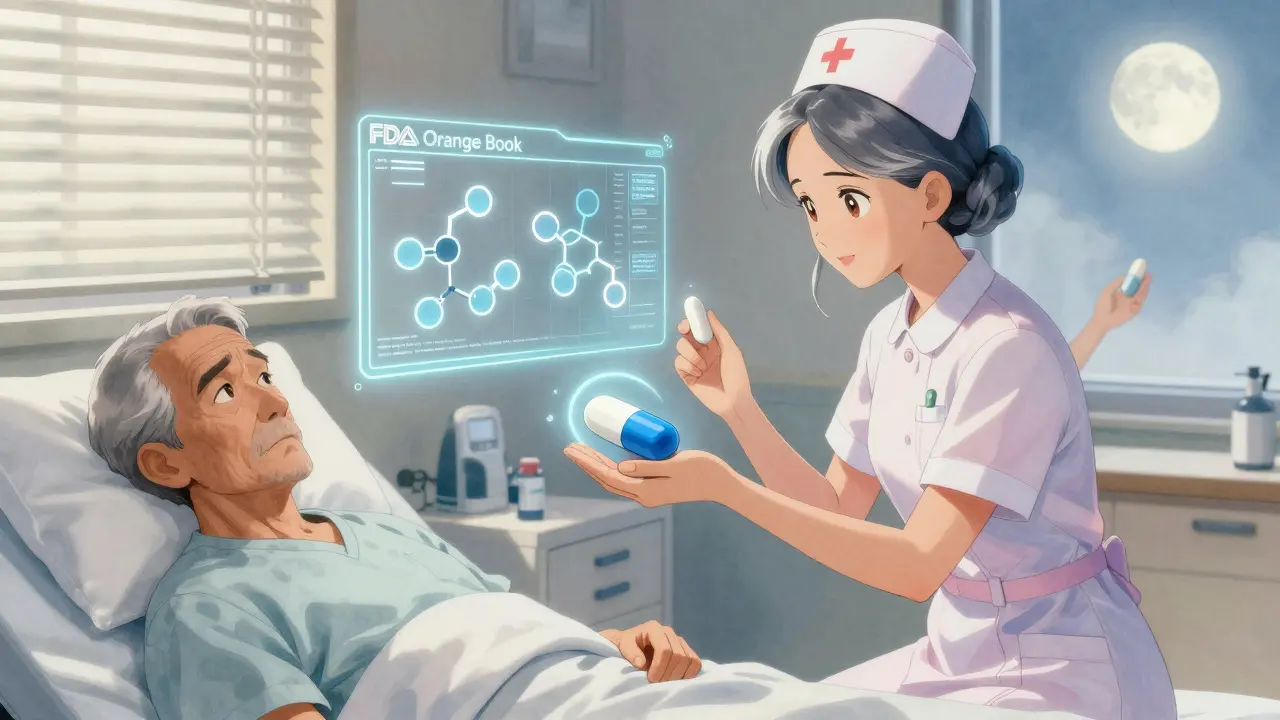

When a patient picks up a prescription and sees a pill that looks completely different from what they’re used to, panic can set in. Is this really the same medicine? That’s the question nurses hear every day - and it’s one they’re trained to answer with clarity, compassion, and evidence.
Generics make up 90% of all prescriptions filled in the U.S., yet many patients still believe they’re less effective, less safe, or somehow "second-rate." Nurses are on the front lines of changing that mindset. They don’t just hand out pills. They explain, reassure, and verify understanding - often in under five minutes.
Why Nurses Are the Key to Generic Medication Acceptance
Pharmacists counsel at the pharmacy counter. Doctors prescribe. But nurses are the ones who stand beside the patient as they swallow their morning meds, adjust their insulin, or take their blood pressure pills. This is where the real education happens - not in a 12-minute pharmacy visit, but during the 90-second window between when a patient wakes up and when they go to surgery.
Studies show that when nurses talk to patients about generics, adherence improves by 22% to 37%. Why? Because nurses don’t just recite facts. They listen. They notice the hesitation in a patient’s voice. They see the worry in their eyes when they hold a white oval pill instead of the blue capsule they’ve taken for years.
The FDA requires generics to have the same active ingredient, strength, dosage form, and bioequivalence (within 80-125% of the brand) as the original. But patients don’t care about bioequivalence percentages. They care about whether their body will respond the same way. Nurses bridge that gap.
What Nurses Actually Say - And How They Say It
There’s no one-size-fits-all script, but effective nursing counseling follows a clear structure. Based on national guidelines from the American Nurses Association and the Institute for Safe Medication Practices, here’s what works:
- Start with what the patient already knows. "You mentioned you’re worried about the new pill - can you tell me what you’ve heard?" This opens the door instead of shutting it down.
- Use plain language, not jargon. Say: "The FDA makes sure generics work the same way as the brand. They have the exact same medicine inside. The only difference is the color, shape, or name on the pill - and that’s because the brand name company’s patent ran out. The FDA doesn’t allow a generic to be sold unless it does the same job as the original."
- Address the visual shock. "I know this pill looks different. I get it. When I first switched my own blood pressure med, I thought the same thing. But the active ingredient? Same. The dose? Same. The effect? Same."
- Use the "teach-back" method. Ask: "Can you explain to me why this pill is safe to take?" If they say, "Because it’s cheaper," that’s a red flag. If they say, "Because it has the same medicine as the blue one, and the FDA checks it," they’ve understood.
- Document it. In 92% of Magnet hospitals, nurses must record patient understanding. It’s not just paperwork - it’s protection. For the patient and the nurse.
One nurse from Johns Hopkins shared: "I show patients the FDA Orange Book on my tablet. We look up the brand name. Then we look up the generic. Side by side. Same active ingredient. Same strength. Same route. That visual usually does more than any speech."
The Hidden Risks - And How Nurses Prevent Them
Not all generics are created equal in the eyes of patients - and some drugs are more sensitive than others. Narrow therapeutic index (NTI) medications like warfarin, levothyroxine, and phenytoin are especially tricky. A small change in dose can lead to serious harm: a stroke, a seizure, or a thyroid crisis.
Nurses know this. That’s why they don’t just say, "It’s the same." They say: "We’re using this generic because it’s been approved by the FDA. But I want you to know - we’re not switching manufacturers unless you’re okay with it. If you feel different - even a little - call us right away."
A 2023 case study in the American Journal of Health-System Pharmacy showed a 68-year-old patient who stopped taking levothyroxine after a generic switch because no one explained the change. He ended up hospitalized with myxedema coma. That’s not a failure of the drug. It’s a failure of communication.
Nurses are trained to spot these risks. They know which drugs need extra attention. They know which patients have had bad experiences before. They know when to pause, when to call the pharmacist, and when to involve the provider.
What Nurses Wish Patients Knew
Here are the top three myths nurses hear - and how they debunk them:
- Myth: "Generics are made in worse factories." Reality: The FDA inspects all manufacturing plants - brand and generic - using the same standards. Many generics are made in the same factories as brand-name drugs. The only difference? The label.
- Myth: "If it’s cheaper, it must be lower quality." Reality: Generics cost less because companies don’t spend millions on ads or patents. The medicine? Identical. The savings? Up to 85%.
- Myth: "My body reacted differently to the generic." Reality: Sometimes, patients are reacting to inactive ingredients - like dyes or fillers - not the active drug. Nurses help identify this. If a patient says, "I got a rash after the switch," the nurse checks if the generic uses a different dye. That’s fixable.
According to the FDA’s 2021 consumer survey, 68% of patients believe generics are less effective. Nurses are the ones who turn that number around - one conversation at a time.
The Training Gap - And What’s Being Done
Here’s the uncomfortable truth: 41% of new nurses say they weren’t trained well enough to counsel on generics. That’s not because they’re unskilled - it’s because nursing school didn’t prepare them.
But things are changing. The American Association of Colleges of Nursing now requires all nursing graduates to demonstrate competency in explaining therapeutic equivalence. Hospitals are adding 8-10 hours of mandatory training. Some use simulations with virtual patients. Others use role-play with standardized patients.
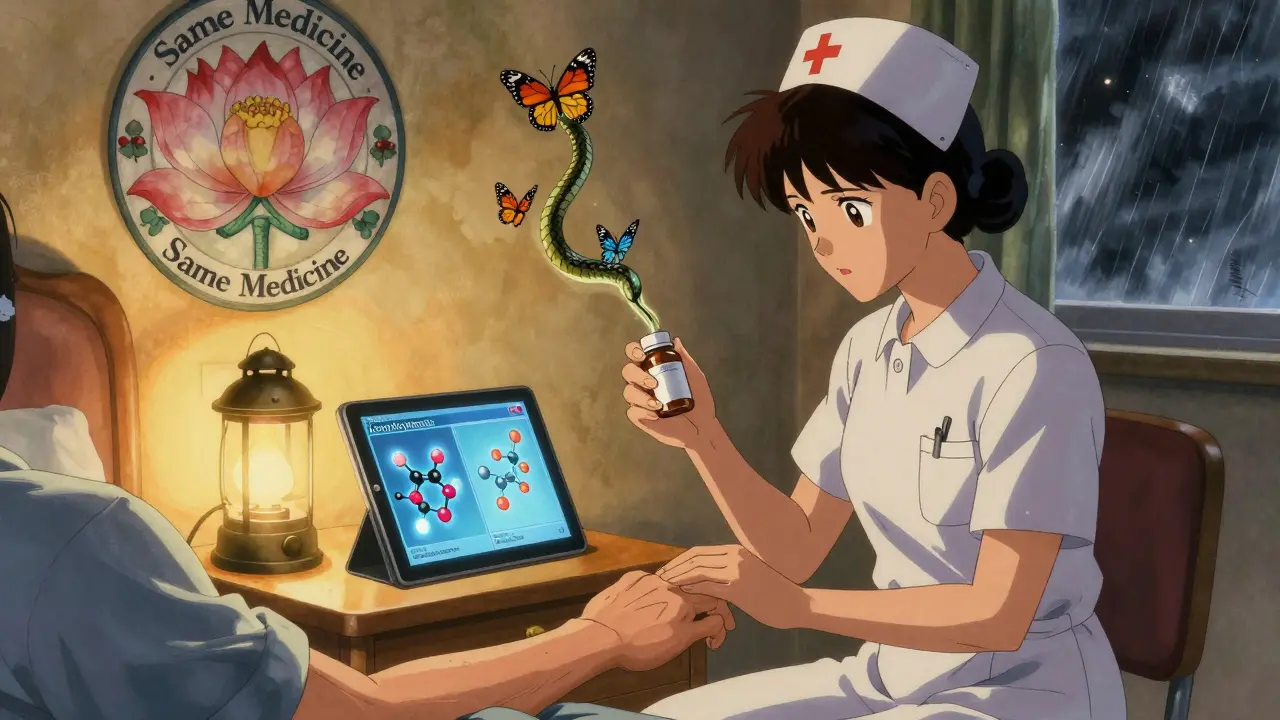
And now, technology is helping. AI tools integrated into Epic and Cerner systems give nurses real-time access to FDA Orange Book data at the bedside. They can pull up a comparison chart in seconds: brand name vs. generic - active ingredient, manufacturer, dosage form - all side by side.
Mayo Clinic’s "Generic Medication Passport" lets patients keep a small card that lists every generic they’ve been switched to - with a photo of the pill and the reason why. It’s simple. It’s visual. It’s powerful.
What’s Next for Nursing and Generics
By 2028, biosimilars - complex biologic generics - will grow 300%. These aren’t simple pills. They’re injectable drugs for cancer, arthritis, and autoimmune diseases. They’re harder to copy. They’re harder to explain.
Nurses will need new training. New tools. New confidence.
But the core message won’t change: "It’s the same medicine. It’s just not branded. And that’s okay."
The future of safe, affordable care doesn’t just depend on drug prices. It depends on whether a nurse can sit down with a patient, look them in the eye, and say: "I know this looks different. But I promise you - it works the same."
Are generic medications really as effective as brand-name drugs?
Yes. The FDA requires generics to have the exact same active ingredient, strength, dosage form, and bioequivalence as the brand-name drug. That means they work the same way in the body. Generics are tested in clinical studies to prove they deliver the same amount of medicine into the bloodstream at the same rate. The only differences are in color, shape, or inactive ingredients - none of which affect how well the medicine works.
Why do generic pills look different from brand-name ones?
The appearance of a pill - its color, shape, or size - is determined by the manufacturer and is often protected by trademark laws. Once a brand-name drug’s patent expires, other companies can make the same medicine, but they can’t copy the exact look. That’s why generics look different. But the medicine inside? Identical. Nurses often show patients side-by-side images from the FDA Orange Book to prove this.
Can switching to a generic cause side effects?
The active ingredient won’t cause new side effects - it’s the same as the brand. But sometimes, the inactive ingredients (like dyes or fillers) in a generic can trigger mild reactions in sensitive patients - like a rash or stomach upset. Nurses watch for this and can help switch to a different generic or back to the brand if needed. This is rare and manageable.
Which medications should I be extra careful about when switching to generics?
Narrow therapeutic index (NTI) drugs require extra caution. These include warfarin, levothyroxine, phenytoin, cyclosporine, and lithium. Small changes in blood levels can lead to serious problems. Nurses monitor these closely, often sticking with the same manufacturer unless the patient and provider agree to switch. They also document every change and educate patients to report any unusual symptoms.
Why do insurance companies push for generics?
Generics cost 80-85% less than brand-name drugs. This saves patients money and reduces overall healthcare spending. Insurance companies require generics to make care more affordable. Nurses explain this to patients - not to pressure them, but to help them understand that choosing a generic doesn’t mean cutting corners on quality.
What should I do if I don’t feel the same on a generic?
Call your provider or nurse right away. Don’t stop taking it. Sometimes, the issue is unrelated - like stress, diet, or another medication. But if you truly feel different, your nurse can help check if it’s a reaction to a filler, suggest a different generic, or request the brand. Most of the time, the problem is fixable. But silence can be dangerous.
Tommy Chapman
February 21, 2026 AT 14:50Hariom Sharma
February 22, 2026 AT 23:15Nina Catherine
February 23, 2026 AT 23:07Taylor Mead
February 25, 2026 AT 18:33Amrit N
February 27, 2026 AT 07:49Courtney Hain
February 27, 2026 AT 13:47Greg Scott
February 27, 2026 AT 16:00Caleb Sciannella
March 1, 2026 AT 12:54Liam Crean
March 2, 2026 AT 21:43John Cena
March 3, 2026 AT 18:46aine power
March 4, 2026 AT 21:10Irish Council
March 6, 2026 AT 03:07Freddy King
March 7, 2026 AT 01:31