
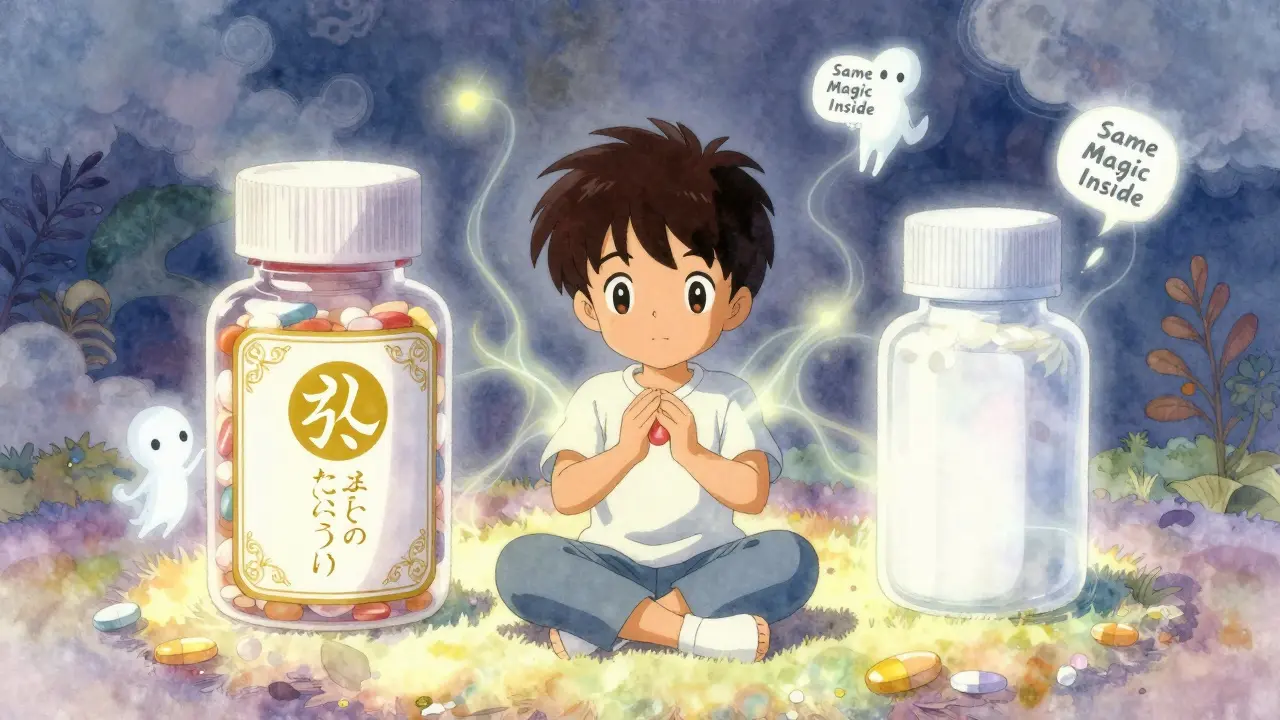

When your child asks why their medicine looks different from the last time, or why it costs less at the pharmacy, they’re not just being curious-they’re ready to learn. Many parents and teachers assume kids don’t need to understand the difference between brand-name and generic drugs. But the truth is, teaching children about generic medications early builds trust, reduces fear, and helps them become smarter, safer users of medicine for life.
What Are Generic Drugs, Really?
A generic drug is the same as a brand-name drug in every important way: same active ingredient, same dose, same way it works in the body. The only differences are the name, the color, the shape, and the price. Generic drugs cost up to 80% less because the company didn’t pay for the original research or advertising. That’s it.
Think of it like buying apples. One bag says ‘Red Delicious Brand Apples’ and costs $5. Another says ‘Fresh Orchard Apples’ and costs $1.50. They’re both apples. Same taste, same nutrition. The brand just spent more money on packaging and ads. Generic drugs work the same way.
The FDA requires generics to meet the same strict standards as brand-name drugs. They’re tested for safety, strength, and how well they’re absorbed by the body. In fact, 9 out of 10 prescriptions filled in the U.S. are generics-and most of them work just as well.
Why Teach Kids About This?
Children hear confusing messages about medicine. They see commercials for expensive pills with happy families laughing. They hear adults say, ‘This is the best one,’ or ‘We have to get the name-brand.’ Some kids even think cheaper means weaker or unsafe.
When kids don’t understand the difference, they might:
- Refuse to take their medicine because it looks different
- Believe generics are ‘fake’ or ‘bad’
- Feel embarrassed if their family uses cheaper medicine
- Grow up thinking all medicine has to be expensive
Teaching them early stops these myths before they take root. It also helps families save money without sacrificing health.
How to Talk to Young Kids (Ages 3-7)
For little ones, keep it simple and visual.
Use toys or drawings. Show two pills-one with a logo, one plain. Say: ‘This one is called ‘CoughStop Brand.’ This one is just ‘CoughStop.’ They both have the same magic inside to help your cough. The plain one costs less so we can use the money for something else, like ice cream.’
Make it fun. Turn it into a game: ‘Medicine Detective.’ Ask them to find the matching medicine in the cabinet. Point out that even though the labels are different, the shape and color might be the same. This builds observation skills and reduces fear of unfamiliar packaging.
Stories help too. Read books like The Medicine Monster or make up your own: ‘Dr. Pill and the Two Brothers’-one brother wears a superhero cape (brand), the other wears a plain T-shirt (generic). They both have the same superpower: healing coughs.’
Teaching Kids Ages 8-12
Older kids can handle a little more detail. Start with the science.
‘The active ingredient is the part that fixes the problem. In ibuprofen, it’s the same whether it’s Advil or a store brand. The rest is just filler-dyes, flavors, coatings. Those don’t change how it works.’
Use real examples. Show them the medicine bottle. Look at the active ingredient on the label together. Compare two bottles side by side. Ask: ‘What’s the same? What’s different?’
Introduce the idea of cost. ‘Your doctor chose this medicine because it works just as well and saves our family money. That money can go to your soccer gear, or your next book.’
Some kids will ask: ‘Why do companies make brand names if generics are the same?’ That’s a great opening to talk about advertising. ‘Companies spend millions on TV ads to make you think their pill is better. But the FDA says they’re equal. That’s why we trust the label, not the logo.’

What Not to Say
Don’t say: ‘This is just a cheap version.’ That makes kids feel like it’s inferior.
Don’t say: ‘Don’t worry, it’s safe.’ That invites doubt. Instead, say: ‘It’s the same medicine, just labeled differently. The FDA checks it just like the expensive one.’
Avoid scare tactics. Never say, ‘If you don’t take the brand-name, you won’t get better.’ That’s false and undermines trust.
Real-Life Scenarios to Practice
Role-play is powerful. Try these:
- You’re at the pharmacy. The pharmacist says, ‘We have the generic version of your medicine. It’s $12 instead of $60. Want to try it?’ Let your child answer. Practice saying, ‘Yes, please.’
- Your friend says, ‘My mom only buys the brand. Generic medicine is risky.’ How do you respond? Practice saying, ‘Actually, they’re the same. The FDA makes sure of that.’
- You find a pill on the floor. What do you do? Teach them: Never touch unknown medicine. Tell an adult. Don’t assume it’s safe just because it looks familiar.
These aren’t just lessons-they’re life skills. Kids who understand medicine are less likely to misuse it, more likely to take it correctly, and less afraid of the pharmacy.
Resources That Actually Work
There are free, trusted tools made for schools and parents:
- Generation Rx (from The Ohio State University) has free printable activities for kids ages 5-12. Their ‘Medication Safety Patrol’ game teaches kids to never take medicine without an adult.
- NIDA for Teens has simple explainers on how medicines work, including generics. Their site is designed for kids to read on their own.
- MedlinePlus Kids’ Page (from the U.S. National Library of Medicine) has colorful diagrams showing how pills work in the body.
These aren’t flashy apps with cartoons. They’re clear, science-backed, and used in over 1,500 schools across the U.S. and Australia.
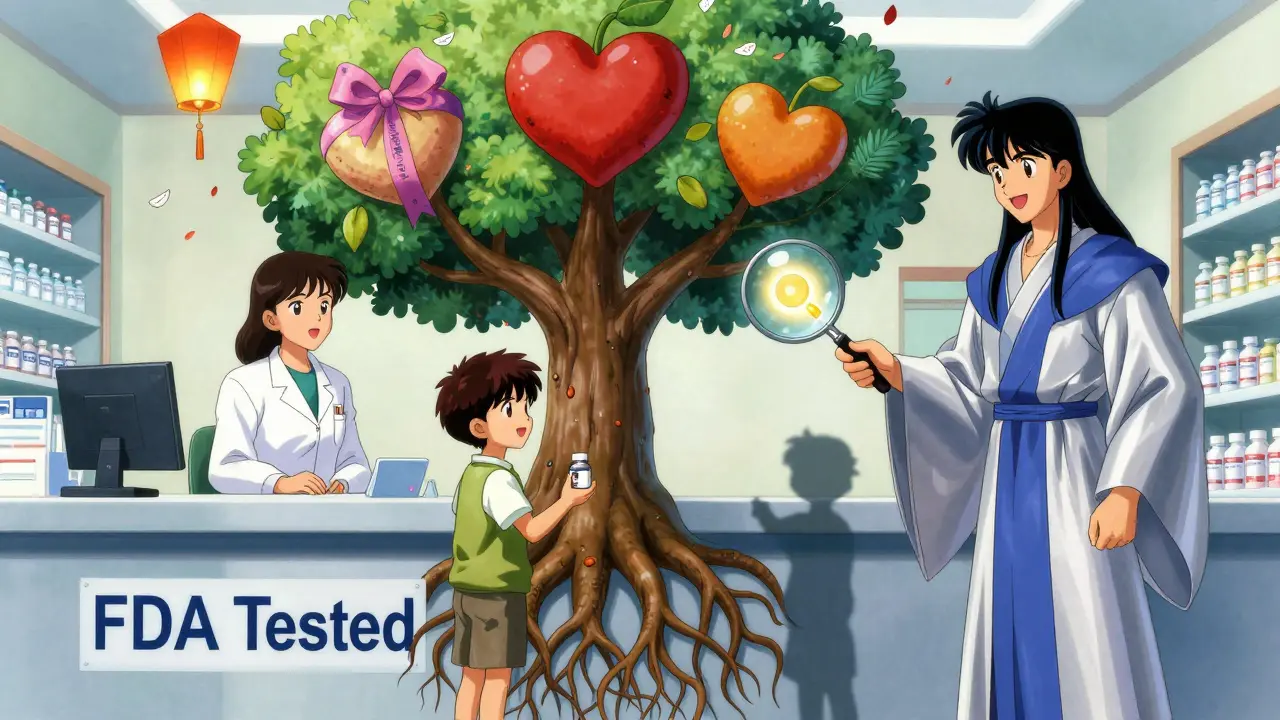
What Teachers Can Do
Schools don’t need fancy programs. A 10-minute lesson once a term can make a difference.
Try this in class:
- Show two pill bottles side by side. Ask students to write down what’s the same and what’s different.
- Read a short story: ‘The Day the Medicine Changed Colors.’
- Have kids draw their favorite medicine and label the active ingredient.
One teacher in Canberra did this with her Year 4 class. A week later, a student brought in a bottle of his grandma’s medicine and said, ‘I checked the label. The active ingredient is the same as mine. I told her we could save money.’ That’s the power of simple, honest teaching.
When Generics Aren’t the Answer
Most of the time, generics are perfect. But not always.
Some medicines, like thyroid pills or epilepsy drugs, need to be extremely consistent. For these, doctors sometimes recommend sticking with one brand. That’s not because the generic is bad-it’s because tiny differences in how the body absorbs the drug can matter more in these cases.
Teach kids: ‘Sometimes, your doctor picks one because it’s the best fit for your body. That’s okay. It’s still science, not magic.’
What Happens When Kids Don’t Learn This?
Without this knowledge, kids grow into adults who:
- Believe expensive = better, even when it’s not
- Stop taking medicine because it looks different
- Feel ashamed if they can’t afford brand names
- Don’t know how to read a medicine label
One study found that kids who didn’t understand generics were 3 times more likely to skip doses when their medicine changed packaging. That’s not just about cost-it’s about safety.
Start Small. Start Now.
You don’t need a lesson plan. You don’t need a PowerPoint. You just need to answer their questions honestly.
Next time your child asks, ‘Why does this pill look different?’ say: ‘It’s the same medicine, just a different label. It works the same way, and it saves us money. That’s smart.’
That’s all it takes to build a foundation of trust, knowledge, and confidence that will last them a lifetime.
Harbans Singh
December 25, 2025 AT 07:53Love this. My niece used to cry every time her asthma inhaler changed color. We started calling them 'medicine twins'-same power, different outfit. Now she checks the label like a detective. No more tears, just ice cream money saved.
Rick Kimberly
December 27, 2025 AT 06:36This is a commendable pedagogical approach to pharmaceutical literacy. The alignment with FDA regulatory standards and the use of analogical reasoning-particularly the apple comparison-are pedagogically sound strategies for cognitive scaffolding in developmental psychology.
Terry Free
December 27, 2025 AT 08:18Wow. So we're teaching kids that Big Pharma is just a scam and generics are the real heroes? Next you'll say tap water is better than bottled. At least the brand name has a logo. Kids need to know the difference between a superhero and a guy in a hoodie.
Lindsay Hensel
December 27, 2025 AT 09:31Brilliant. This is the quiet revolution we need. Not in headlines. Not in ads. But in kitchens. In classrooms. In quiet moments when a child asks, 'Why?' And we answer with truth, not fear.
Katherine Blumhardt
December 27, 2025 AT 16:25OMG this is so important!! I just realized my kid thought the generic was fake bc it was white and not blue!! I'm gonna start the medicine detective game tonight!! 😍
sagar patel
December 28, 2025 AT 22:43Linda B.
December 30, 2025 AT 04:00Who controls the FDA? Who funds the studies? Why are all the 'trusted' sources owned by the same conglomerates that make brand names? You're teaching kids to trust labels... but who made the label?
Christopher King
December 31, 2025 AT 19:32Let me tell you something. This isn't about medicine. It's about control. They want you to believe you're saving money-but what they're really doing is conditioning you to accept whatever they give you. The pill doesn't matter. The system does. And they're training kids to be compliant consumers from age three.
Bailey Adkison
January 2, 2026 AT 01:27Generic drugs are fine for most cases. But when you're on a narrow therapeutic index drug and your kid's seizure meds switch without warning? That's not science. That's negligence. Don't pretend this is risk-free.
Michael Dillon
January 3, 2026 AT 21:44Hey I get it, generics save money. But let's be real-most parents don't care about the active ingredient. They care about whether their kid throws up or not. And if the new pill looks weird? They'll switch back. No matter what the FDA says.
Gary Hartung
January 5, 2026 AT 14:17Oh, wonderful. Another 'educational initiative' that assumes children are blank slates and parents are too stupid to understand the difference between a capsule and a tablet. Please. My child knows that if it doesn't have a logo, it's not worth taking. Brand = trust. Period.
Ben Harris
January 7, 2026 AT 09:34Wait-you're telling me we're teaching kids to accept whatever pill the system gives them? No branding? No identity? No story? That's not education. That's erasure. Kids need heroes. Not just active ingredients. They need to believe in something bigger than a label.