


Medication-Induced Aplastic Anemia Symptom Checker
Symptom Assessment Tool
This tool helps you identify potential signs of medication-induced aplastic anemia based on common symptoms. It is not a diagnostic tool.
This tool is for informational purposes only. If you have these symptoms while taking high-risk medications, consult a healthcare professional immediately. Do not delay medical care.
When you start a new medication, you expect relief - not a life-threatening collapse of your blood system. But for some people, common drugs can silently destroy the bone marrow’s ability to make red blood cells, white blood cells, and platelets. This isn’t a rare myth. It’s medication-induced aplastic anemia, a real and dangerous condition that kills if missed.
What Exactly Is Medication-Induced Aplastic Anemia?
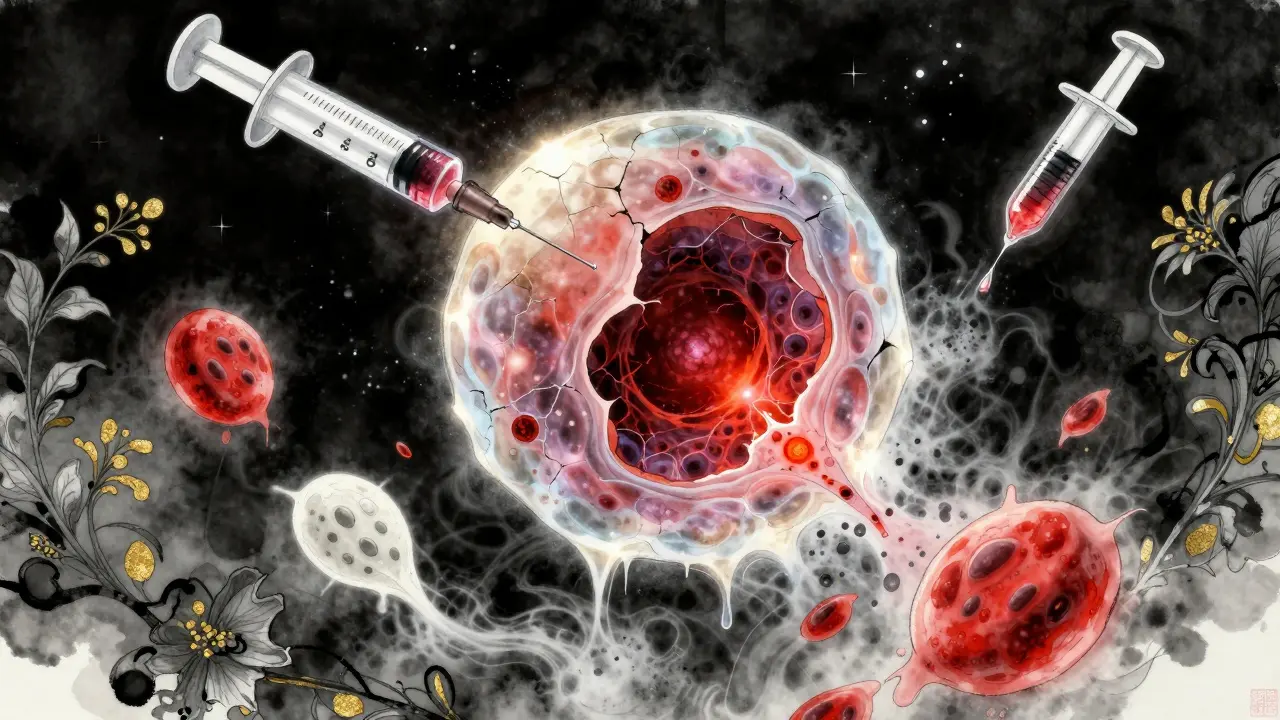
Aplastic anemia happens when your bone marrow stops making enough blood cells. It’s not cancer. It’s not an infection. It’s your body’s blood factory shutting down. And in about 5-10% of cases, it’s triggered by a drug you took - sometimes just a few weeks ago.
Drugs like chloramphenicol, carbamazepine, sulfonamides, gold salts, and even some NSAIDs can cause this. Some, like chloramphenicol, damage stem cells directly. Others, like carbamazepine, trick your immune system into attacking your own bone marrow. The result? Your blood counts drop - hemoglobin, neutrophils, platelets - all falling at once. This is called pancytopenia.
What makes it dangerous isn’t just the low counts. It’s how fast they can fall. In some cases, blood levels drop 30-50% in just two to four weeks. And unlike normal drug side effects - like a stomachache or dizziness - this doesn’t get better with rest. It gets worse.
The Early Signs You Can’t Ignore
Most people don’t realize they’re in danger until they’re in the ER. That’s because the early signs look like everything else: fatigue, a low fever, a bruise you didn’t remember getting.
But here’s the difference: these symptoms don’t fade. They pile up.
- Persistent fatigue - not just tired after work, but exhausted even after 8 hours of sleep. No energy to get out of bed.
- Unexplained bruising - multiple bruises on your legs or arms without bumping into anything. Purple splotches that show up overnight.
- Recurrent low-grade fevers - 99-101°F, not high enough for the flu, but never going away.
- Prolonged infections - a cold that won’t clear, a sore throat that lingers for weeks.
- Unexplained weight loss - 5-10 pounds over a few weeks, with no diet or change in activity.
- Bleeding gums or nosebleeds - not just occasional, but frequent and hard to stop.
These aren’t normal. They’re red flags. And they often appear before you even feel sick. Blood tests can show the drop weeks before symptoms become obvious. That’s why, if you’re on a high-risk drug, you need baseline blood work - and follow-up tests.
Which Medications Are the Biggest Risks?
Not all drugs cause this. But some carry a known, documented risk. Here are the top culprits:
- Chloramphenicol - an old antibiotic, rarely used now, but still in some topical eye drops and in developing countries. Risk is 1 in 24,000 to 1 in 40,000 users - low, but deadly when it happens.
- Carbamazepine - used for seizures and bipolar disorder. Increases risk 15 times. Often missed because it’s common and prescribed for years.
- Phenytoin - another seizure drug. Similar immune-triggered mechanism.
- Sulfonamides - antibiotics like Bactrim. Often used for UTIs.
- Gold compounds - used for rheumatoid arthritis. Older treatment, but still in use.
- NSAIDs - especially long-term, high-dose use of drugs like phenylbutazone (rare now) or even ibuprofen in rare cases.
- Certain antipsychotics - like clozapine. Requires regular blood monitoring for this exact reason.
Chemotherapy drugs cause bone marrow suppression too - but that’s expected. Aplastic anemia is different: it’s unpredictable, persistent, and doesn’t bounce back after stopping the drug.
What to Do the Moment You Suspect It
If you’re on one of these drugs and you notice even two of those early signs - stop. Don’t wait. Don’t Google it. Don’t assume it’s stress.
Here’s your urgent action plan:
- Stop the medication immediately. This is the single most important step. Studies show 85% of mild cases start recovering within 4 weeks of stopping the drug.
- Call your doctor today. Don’t wait for your next appointment. Say: ‘I’m on [drug name] and I’m having fatigue, bruising, and low fevers. I’m worried about bone marrow failure.’
- Get a CBC test within 24 hours. This is a simple blood test that checks your red cells, white cells, and platelets. If your hemoglobin is below 10 g/dL, neutrophils under 1,500/μL, or platelets under 150,000/μL - you need urgent care.
- If platelets are below 50,000/μL, see a hematologist now. If they’re under 10,000/μL or you’re bleeding - go to the ER.
- If you have a fever above 100.4°F (38°C), go to the ER immediately. No waiting. No calling ahead. This is a medical emergency. Your immune system is gone. Even a small infection can kill you.
Don’t be the person who says, ‘I thought it was just a virus.’ In one study, 68% of patients with medication-induced aplastic anemia waited 4-6 weeks before seeking help. By then, it was severe.
Why Diagnosis Is Often Delayed - And How to Prevent It
Doctors miss this. Not because they’re careless - because it’s rare. In a 2022 survey, only 47% of family doctors could name the top five drugs linked to aplastic anemia.
Patients get told: ‘It’s stress.’ ‘You’re anemic from your period.’ ‘It’s just a cold.’
But here’s what works: know your meds. Keep a list - name, dose, start date. Show it to every doctor. If you’re on carbamazepine or chloramphenicol, ask for a CBC every 2 weeks for the first month.
Community clinics in rural areas often can’t do same-day blood tests. If you’re in one, go to a hospital lab. Pay out of pocket if you have to. A $30 test could save your life.
And if you’ve had this before - never restart the drug. The risk of relapse is 90%. Even if you felt fine after stopping it.
What Happens After Diagnosis?
If tests confirm aplastic anemia, you’ll need a bone marrow biopsy. That’s the only way to be sure. A healthy marrow looks full of cells. Yours will look empty - less than 25% cellularity.
Treatment depends on severity:
- Mild cases: Stop the drug. Monitor blood counts. Recovery often happens in 4-8 weeks.
- Severe cases: Immunosuppressive therapy - drugs like horse anti-thymocyte globulin and cyclosporine. This stops your immune system from attacking your marrow. Success rates are now above 75%.
- Very severe cases: Bone marrow transplant. Especially for younger patients with a matched donor. Survival rates exceed 85% when done early.
There’s no magic pill. But if caught early, most people recover fully. The key isn’t fancy treatment - it’s speed.
Dr. Neal Young from the NIH says it plainly: ‘Survival drops from under 10% to 45% if diagnosis is delayed beyond 8 weeks.’
What’s Changing in 2026?
There’s new hope. In 2023, the AAMDS Foundation launched a free app that lets you log symptoms and blood counts. Users saw a 40% drop in diagnostic delays.
Hospitals are now using AI alerts in electronic records. If you’re on carbamazepine and your platelets drop 20% in a week - the system flags it automatically.
And researchers are working on genetic tests to predict who’s at risk before they even take the drug. In trials, a simple blood test can now identify people whose immune systems are likely to attack their own marrow after certain medications.
These aren’t sci-fi. They’re here. And they’re saving lives.
Bottom Line: Don’t Wait for a Crisis
You don’t need to be scared of every medication. But you do need to be smart.
If you’re taking one of the high-risk drugs - know the signs. Get your blood checked. Don’t brush off fatigue. Don’t ignore bruising. Don’t assume it’s nothing.
Medication-induced aplastic anemia is rare. But it’s preventable. And if you catch it early, your odds of recovery are better than 85%.
That’s not luck. That’s action.
Lethabo Phalafala
January 13, 2026 AT 18:40My cousin went through this after taking Bactrim for a UTI. They told her it was just stress. Three weeks later, she was in the ICU with a fever of 104 and zero platelets. Don’t wait. Get tested. This isn’t hype - it’s survival.
Trevor Whipple
January 13, 2026 AT 21:50lol so now every time someone feels tired they gotta panic and get a CBC? I took ibuprofen for a week and now I’m scared I’m gonna die from bone marrow failure? chill the fuck out. 99.9% of people are fine. you’re just feeding anxiety culture.
Nelly Oruko
January 13, 2026 AT 22:44There’s a quiet tragedy in how medicine treats rarity as irrelevance. We dismiss symptoms because they’re uncommon, not because they’re implausible. The human body doesn’t care about statistics - it only cares about the one person whose marrow stops working. That’s why vigilance isn’t paranoia. It’s ethics.
Clay .Haeber
January 15, 2026 AT 20:44Oh wow, another ‘your meds are trying to kill you’ post. Next up: ‘Your coffee is secretly eroding your stem cells.’ I mean, sure, carbamazepine can cause this - but so can breathing bad air, drinking tap water, and being alive in 2026. Do you want me to panic about my toaster too?
sam abas
January 16, 2026 AT 09:12Let’s be real - most of these ‘early signs’ are just normal human experiences. Fatigue? Everyone’s tired. Bruising? I bruise if I sneeze wrong. Low-grade fever? That’s just my metabolism being ‘vibey.’ The real problem here isn’t aplastic anemia - it’s the medical-industrial complex turning every minor symptom into a life-or-death crisis to sell more tests. CBCs aren’t free, you know. And no, I’m not paying $30 for a test because I’m ‘scared.’ That’s not medicine - that’s fear monetization.
Also, ‘go to the ER if you have a fever’? Yeah, because nothing says ‘I’m a responsible adult’ like showing up at 2 a.m. with a 99.8°F temp because you read a Reddit post. Please. People used to live without AI alerts and apps. We survived. We’ll survive again.
And let’s not forget: if you’re on carbamazepine for 10 years and suddenly get a bruise, maybe it’s not the drug - maybe it’s that you’re 50 now and your skin is paper-thin. Or you slept wrong. Or your cat scratched you. Not everything is a bone marrow emergency. Stop weaponizing medical jargon to feel important.
Lance Nickie
January 18, 2026 AT 02:09Chloramphenicol? That’s an ancient antibiotic. Who even uses that anymore? This post is just fearmongering with a side of outdated meds.
John Pope
January 18, 2026 AT 12:19There’s a metaphysical layer here - the body as a temple, the pharmaceutical industry as the high priest, and we, the faithful, blindly ingesting sacraments without questioning the altar. Aplastic anemia isn’t just a clinical event - it’s a rupture in the covenant between human and molecule. We’ve outsourced our somatic sovereignty to Big Pharma, and now we’re surprised when the gods turn vengeful. The real crisis isn’t the drug - it’s our surrender of agency. Wake up. Ask for the blood test. Demand autonomy. The marrow remembers what the mind forgets.
Adam Vella
January 19, 2026 AT 13:42While the intent of this post is commendable, the framing lacks nuance. The risk-benefit calculus of pharmacotherapy is not binary. For example, carbamazepine’s association with aplastic anemia carries an incidence rate of approximately 1 in 100,000 patient-years - statistically negligible compared to the morbidity and mortality of uncontrolled seizures. To suggest universal CBC monitoring for all users is not evidence-based; it is alarmist and resource-inefficient. Monitoring should be stratified: high-risk populations (e.g., HLA-B*15:02 carriers in Southeast Asian descent) warrant surveillance, but blanket recommendations dilute clinical focus. Furthermore, the implication that all NSAIDs pose comparable risk is misleading. Phenylbutazone is obsolete; ibuprofen has no credible association in peer-reviewed literature at therapeutic doses. Misinformation, even when well-intentioned, erodes public trust in evidence-based medicine.