

Every year, millions of unused pills, patches, and liquids sit in medicine cabinets across the U.S.-some expired, some never opened, some just forgotten. These aren’t just clutter. They’re a public health risk. People misuse them. Kids find them. Pets chew them. And when flushed down the toilet or tossed in the trash, they pollute our water and soil. The solution? Take-back events. But showing up with a bag of meds isn’t enough. How you prepare them matters-big time.
Why Proper Preparation Isn’t Optional
The first National Prescription Drug Take-Back Day was in 2010, launched by the DEA after a survey found 70% of people who misused prescription painkillers got them from family or friends. That’s not a coincidence. It’s a system failure. Home medicine cabinets became unofficial pharmacies for drug seekers. Today, 18.4 million Americans still misuse prescription drugs each year. And it’s not just about addiction. Pharmaceuticals in waterways have been found in 80% of U.S. streams. That’s not a rumor. That’s from U.S. Geological Survey data. Proper disposal through take-back events stops both problems at once.What You Can and Can’t Bring
Not everything in your cabinet belongs in a take-back bin. Here’s what’s accepted at nearly every authorized collection site:- Prescription medications (including controlled substances like oxycodone, Adderall, or Xanax)
- Over-the-counter pills and liquids (ibuprofen, cold medicine, antacids)
- Patches (fentanyl, nicotine, estrogen)
- Topical ointments and creams
- Vitamins and supplements
- Pet medications
- Asthma inhalers and other aerosols (they’re pressurized-fire hazard)
- Hydrogen peroxide
- Iodine-based medications (like Betadine)
- Thermometers (especially mercury ones)
- Illicit drugs (like marijuana or cocaine)
- Sharps (needles, syringes)-these need special disposal
Step-by-Step: How to Get Your Medications Ready
Preparation takes less than five minutes. Do it right, and you’ll avoid embarrassment at the drop-off point.- Keep it in the original container. This is the gold standard. The pharmacy label has the drug name, dosage, and your name. Collection sites prefer this because it helps them verify what’s being returned. Over 90% of sites require or strongly prefer original packaging.
- Remove or cover your personal info. Use a permanent marker to black out your name, address, and prescription number. Don’t just peel off the label-that’s messy and unsafe. Scribble over it until it’s unreadable. This isn’t just privacy-it’s a legal requirement under HIPAA. If your name is visible, staff may reject it.
- No mixing. Don’t dump all your meds into one bag. Keep each medication in its own container. Mixing makes it impossible for staff to identify what’s being disposed of, and some substances can react dangerously if combined.
- For liquids and creams: If the original bottle is broken or missing, put it in a sealed plastic container. A small plastic bottle with a tight cap or a zip-top bag works. Don’t pour it into another container unless you have to.
- For patches: Fold them in half with the sticky side in. This prevents accidental contact and reduces the risk of someone else getting exposed to the drug. This step is mandatory at every site.
What If You Don’t Have the Original Bottle?
Life happens. You lost the bottle. The pharmacy didn’t give you one. Or the label fell off. You’re not out of luck. The Pennsylvania Department of Drug and Alcohol Programs and Washington State both say: if you don’t have the original, use a small sealed container-like a plastic bottle or a zip-lock bag. Just make sure you’ve removed your personal info. Some Walgreens kiosks accept meds in zip-lock bags as long as the name is gone. But if you’re going to a hospital or police station, they might be stricter. When in doubt, call ahead.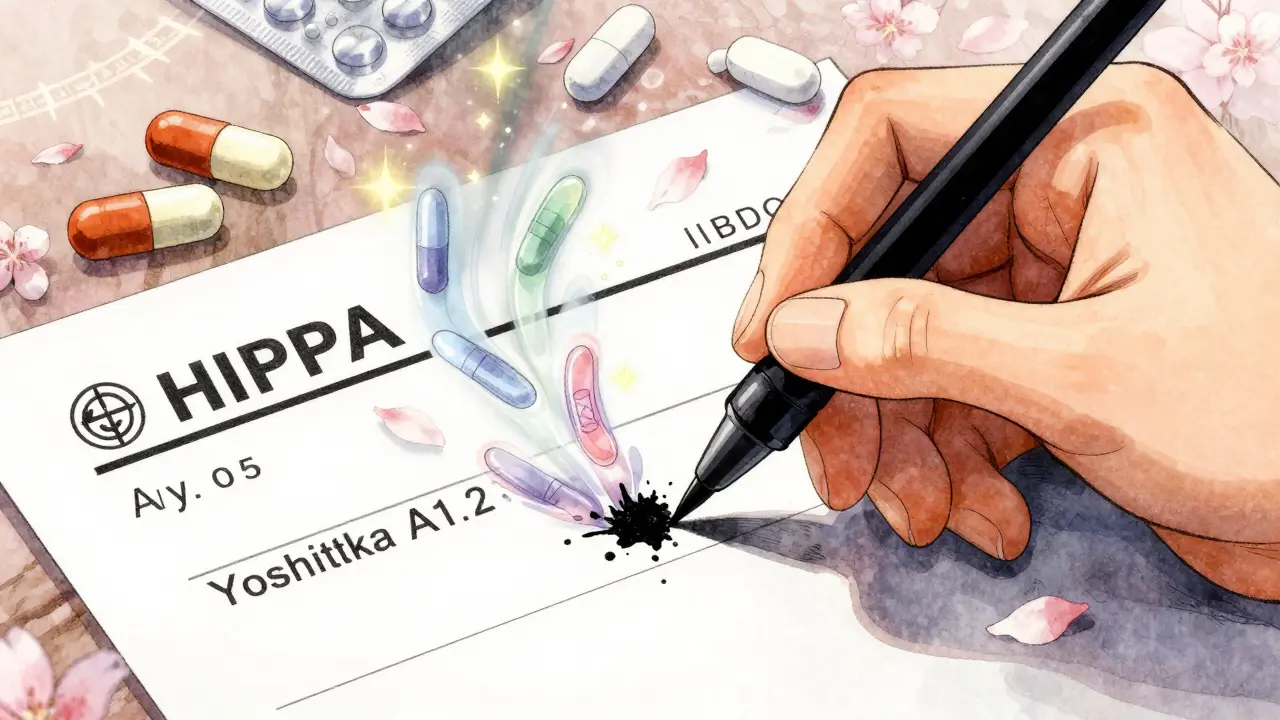
Regional Differences You Need to Know
There’s no single national rule. Preparation varies by state, even by pharmacy chain.- California: All meds must be in original containers. No exceptions. 98% of collection sites enforce this.
- Washington State: Original container OR sealed bag. Liquids must be in secure containers. Patches folded adhesive-side-in.
- Walgreens: Simplest rule. Just bring your meds. No container requirement beyond privacy protection. Their 2,300+ kiosks accept pills, patches, and liquids in any sealed container.
- VA Hospitals: No mixing. No exceptions. Each medication must be separate. Staff will check.
What Happens After You Drop Them Off?
Once you hand over your meds, they’re not going to a landfill or a recycling bin. They’re taken to a licensed incineration facility. In 2024, Stericycle alone destroyed 29,800 tons of pharmaceutical waste this way. That’s the only safe method. Flushing or throwing them away lets chemicals seep into groundwater. Incineration destroys them completely. The DEA requires this. No exceptions.Common Mistakes That Get You Rejected
Even if you think you’re doing it right, here’s what often goes wrong:- Incomplete redaction (41% of rejections): You scratched out your name, but the prescription number is still visible. Cover everything.
- Wrong container for liquids (29% of rejections): A loose bottle of cough syrup in a plastic bag? That’s a mess waiting to happen. Use a sealed container.
- Forgetting to fold patches: Unfolded patches can still deliver a dose. Staff will refuse them.
- Bringing sharps or aerosols: These are dangerous and illegal to mix with meds. Separate them.

Why This Matters More Than You Think
Only 15% of unused medications are properly disposed of. That means 85% are sitting in cabinets, flushed down toilets, or tossed in trash bins. The CDC found 43% of households keep unused opioids at home. That’s a waiting accident. Every time you properly dispose of a pill, you’re reducing the chance someone else will misuse it. You’re protecting your kids, your neighbors, your community. And environmentally? If participation jumped to 50%, the EPA estimates we could keep 6.4 million pounds of pharmaceuticals out of waterways each year. That’s not a small number. That’s the weight of 1,000 elephants.Where to Find a Take-Back Event
You don’t need to wait for a special day. There are over 16,500 permanent collection sites across the U.S. as of 2024. Most are at:- Pharmacies (CVS, Walgreens, Rite Aid)
- Police stations
- Hospitals and VA clinics
- Some city halls or public works centers
srishti Jain
December 31, 2025 AT 09:48This is such a waste of time. People still don’t get it-meds belong in the trash, not some government ritual. You think folding patches saves lives? Lol.
Shae Chapman
January 1, 2026 AT 09:44Thank you for this!! 🙏 I just cleared out my mom’s cabinet last week and was so stressed about how to do it right. This guide is a lifesaver. Seriously, someone should turn this into a printable checklist. 💯
Nadia Spira
January 1, 2026 AT 18:37Let’s be real-this is performative harm reduction. You’re not ‘saving lives’ by dropping off expired ibuprofen. You’re participating in a neoliberal myth that individual compliance fixes systemic failures. The DEA doesn’t care about your patches. They care about controlling supply chains. The real crisis is pharmaceutical lobbying, not your medicine cabinet. 🤷♂️
Glendon Cone
January 3, 2026 AT 03:22Biggest tip I’ve learned? Keep a small Tupperware in your bathroom. Every time you refill a script, toss the old ones in. No drama. No panic. Just a little habit. Took me 3 years to get here, but now it’s automatic. 🌱
Cheyenne Sims
January 5, 2026 AT 01:10It is imperative that citizens adhere to the prescribed protocols for pharmaceutical disposal. The integrity of public health infrastructure depends on compliance with federal guidelines. Any deviation, such as the use of unsealed containers or incomplete redaction, constitutes a violation of environmental and privacy statutes. This is not optional. This is civic duty.
Kelly Gerrard
January 5, 2026 AT 04:56Why are we still having this conversation in 2025? The infrastructure exists. The science is settled. The only reason people don’t participate is laziness and denial. Stop making excuses. Just do it. Your neighbor’s kid isn’t going to find your leftover Adderall if you fold the patch. Simple. Stop overthinking.
henry mateo
January 5, 2026 AT 16:47i just realized i’ve been throwing away my old patches in the trash for years… i had no idea they needed to be folded. i feel so dumb. thanks for the heads up. also, i used a sharpie but i think the rx number is still kinda visible… gonna go back and cover it again. 😅
Henry Ward
January 6, 2026 AT 05:58People who don’t use take-back events are just enabling addiction. If you’re too lazy to fold a patch, you’re probably the same person who leaves their opioids on the counter for their teen to find. Wake up. This isn’t about convenience-it’s about morality.
Sandeep Mishra
January 6, 2026 AT 15:05For those in India or other countries reading this-this system doesn’t exist everywhere, but the principle does. Even if you don’t have a drop-off site, seal your meds in a ziplock, mix with coffee grounds or cat litter, and toss. It’s not perfect, but it’s safer than flushing. We can all do better, wherever we are. 🙏
Kunal Karakoti
January 7, 2026 AT 06:30There’s a quiet dignity in letting go of what no longer serves you-medications, memories, even identities. We cling to expired pills as if they hold the past, but disposal is a form of release. Not just environmental. Spiritual. The body remembers what the mind forgets. And sometimes, letting go is the only medicine left.
Aayush Khandelwal
January 9, 2026 AT 03:39Y’all are overcomplicating this. It’s not a cult ritual. It’s waste management. If the label’s gone and it’s sealed, you’re golden. The ‘original container’ rule? That’s bureaucratic inertia. The DEA doesn’t need your name to incinerate a pill. They need volume. Stop fetishizing paperwork.
Joseph Corry
January 10, 2026 AT 17:10Let’s be honest-this entire framework is a distraction. The real issue is the overprescription of opioids by doctors incentivized by pharma reps. You’re scrubbing your name off a bottle while the real villains are still collecting bonuses. This isn’t activism. It’s therapeutic compliance for the guilt-ridden middle class.