
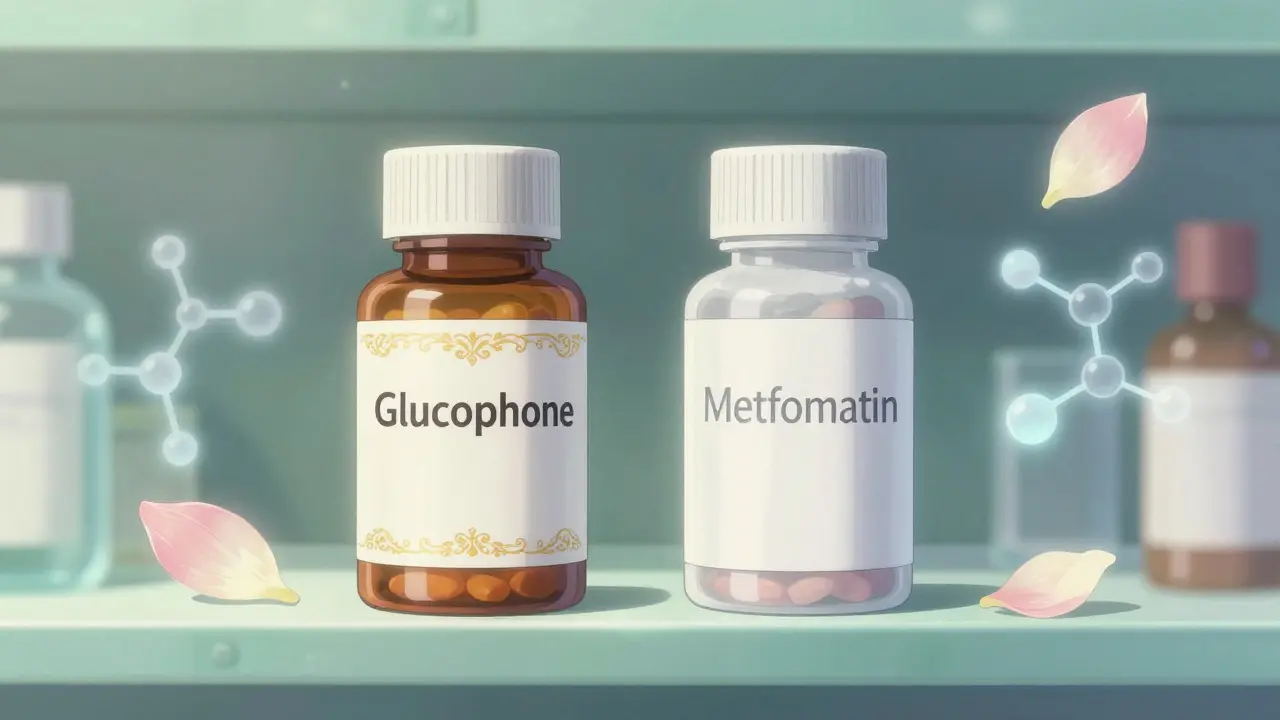

When you pick up a prescription, you might see a bottle labeled with a name you don’t recognize-something like metformin instead of Glucophage. You assume it’s a generic. But what if it’s not? What if it’s the exact same pill, same factory, same ingredients-but just without the brand logo? That’s an authorized generic. And most people have no idea it exists.
Here’s the truth: authorized generics aren’t just cheaper versions of brand-name drugs. They’re the exact same drug. No differences in active ingredients. No changes in how it’s made. No hidden variables. Just a different label. And that makes them fundamentally different from the generics you’ve probably used before.
What Exactly Is an Authorized Generic?
An authorized generic is a brand-name drug that’s sold without the brand name on the bottle. It’s made by the same company that makes the original, or by someone they’ve officially licensed. The FDA defines it clearly: it’s identical in every way to the brand-name version, except for the packaging and labeling. That’s it.
Think of it like buying a car. The brand-name version is a Toyota Camry with the Toyota logo on the hood. An authorized generic is the exact same Camry-same engine, same seats, same safety features-but it’s sold under a different name, maybe as a “Toyota Fleet Model.” Same car. Different sticker.
The key point? Authorized generics don’t go through the Abbreviated New Drug Application (ANDA) process. They don’t need to prove they’re bioequivalent because they’re not different. They’re the original product, just repackaged. That’s why they’re not listed in the FDA’s Orange Book, which tracks traditional generics. They’re under the brand’s original New Drug Application (NDA). No extra approval needed.
How Authorized Generics Are Different from Traditional Generics
Traditional generics are not the same drug. They’re copies. And while they must have the same active ingredient, strength, and dosage form, they can-and often do-use different inactive ingredients. That means fillers, dyes, preservatives, and coatings can vary. For most people, that doesn’t matter. But for some, it does.
Take someone with a sensitivity to lactose. A traditional generic might use lactose as a binder. The brand-name version? Maybe it doesn’t. That small difference can cause stomach upset, allergic reactions, or even affect how the drug is absorbed. Authorized generics don’t have that problem. They’re exact matches. Same fillers. Same coatings. Same everything.
Here’s another big difference: timing. Traditional generics often wait for patent expiration and then fight through legal battles to get the first 180-day exclusivity window. That’s when the first generic maker gets to be the only one selling the drug. But authorized generics? They can launch the same day the patent expires. No waiting. No lawsuits. Just the brand company putting out its own cheaper version.
That’s why some generic manufacturers complain. They say brand companies use authorized generics to steal market share before traditional generics even get off the ground. And there’s data to back it up. A 2022 Health Affairs study found that in nearly 4 out of 10 cases, an authorized generic hit the market at the same time as the first traditional generic-effectively splitting the low-price market before competition could fully take hold.
Why Authorized Generics Cost Less (But Not Always)
Authorized generics usually cost less than the brand-name version-often 15% to 30% cheaper. But they’re not always cheaper than traditional generics. Sometimes, they’re priced the same. Why? Because they’re not competing with each other. They’re competing with the brand.
Let’s say the brand-name drug costs $120 for a 30-day supply. A traditional generic might drop to $15. An authorized generic might be $18. That’s not a huge discount compared to the traditional version. But it’s still way below the brand. And for people who’ve had bad reactions to other generics, $18 is worth it.
Insurance companies don’t always treat authorized generics like generics. Some pharmacy benefit managers (PBMs) classify them as “brand” drugs because they’re made by the same company. That means higher copays. You might pay $40 for an authorized generic while your neighbor pays $10 for a traditional one-even though yours is the exact same medicine.
That’s a huge problem. Patients are being charged more for the exact same product. And no one’s telling them why.
Who Makes Authorized Generics?
Most authorized generics come from three big players: Greenstone LLC (a Pfizer subsidiary), Prasco Laboratories, and Patriot Pharmaceuticals. Together, they handle nearly 80% of the market. Greenstone alone makes over 40% of all authorized generics in the U.S.
These companies don’t develop the drugs. They don’t run the clinical trials. They just get permission from the brand company to package and sell the exact same product. Sometimes, the brand company does it themselves. For example, AbbVie sells its own authorized generic version of Humira. Johnson & Johnson does the same with its drugs.
The FDA keeps a public list of authorized generics, updated monthly. It’s not easy to find, but if you’re a patient or a pharmacist, it’s worth checking. You can verify whether the drug you’re being given is truly an authorized generic-or just another traditional generic pretending to be something better.
What This Means for Patients
Most people don’t know the difference between authorized and traditional generics. A 2022 GoodRx survey found that 78% of patients couldn’t tell them apart just by looking at the pill bottle. That’s not their fault. The system is confusing.
But here’s what matters: if you’ve ever had a bad reaction to a generic, or if your doctor told you to stick with the brand because “the generic didn’t work the same,” you might be dealing with inactive ingredients-not the active drug. An authorized generic could be your solution.
Independent pharmacists report that 67% of their patients ask specifically for authorized generics when they’re available. Why? Because they’ve learned the hard way that not all generics are created equal. One patient told me she switched from a traditional generic for her epilepsy medication and started having seizures. Her doctor switched her to the authorized generic-and she hasn’t had a seizure since. Same active ingredient. Same dose. Just no extra chemicals.

What Pharmacists and Doctors Need to Know
Pharmacists are on the front lines. But most don’t get training on authorized generics. Electronic health records often don’t distinguish them from traditional generics. That means when a patient’s record says “metformin,” you don’t know if it’s the brand, the authorized version, or a generic with different fillers.
That’s a problem for medication reconciliation. If a patient is switched from an authorized generic to a traditional one without warning, it could trigger side effects. And if a patient asks for the authorized version, you need to know how to find it.
Doctors should also be aware. When prescribing, they can write “Dispense as Written” to prevent substitution. But if they know an authorized generic exists, they can specifically request it. That’s not always easy-many EHR systems don’t even list authorized generics as an option. But it’s possible. And it should be done when appropriate.
The Bigger Picture: Why This Matters
The pharmaceutical industry is built on competition. But authorized generics blur the lines. They’re not the enemy. They’re not the hero. They’re a tool. And like any tool, they can be used well-or abused.
On one hand, they give patients access to identical drugs at lower prices. That’s a win. On the other hand, they can be used to block true generic competition. That’s a problem.
Congress is paying attention. The 2022 Consolidated Appropriations Act required the FDA to study the impact of authorized generics on drug competition. The report is due by December 2024. Until then, we’re flying blind.
But here’s what you can do right now: ask. When you get a prescription, ask: “Is this an authorized generic?” If your pharmacist doesn’t know, ask them to check the FDA’s list. If your insurance charges you more for it than a traditional generic, call them. Ask why.
Knowledge is power. And in this case, it could save you money-or even your health.
Are authorized generics the same as brand-name drugs?
Yes. Authorized generics are chemically and therapeutically identical to the brand-name drug. They contain the same active and inactive ingredients, are made in the same facility, and follow the same manufacturing process. The only difference is the label and packaging. The FDA confirms they are considered therapeutically equivalent to the brand-name version.
Why aren’t authorized generics listed in the FDA’s Orange Book?
The Orange Book only lists drugs approved under the Abbreviated New Drug Application (ANDA) process. Authorized generics are marketed under the original brand’s New Drug Application (NDA), so they don’t go through the ANDA process. That’s why they’re excluded from the Orange Book-even though they’re the exact same drug.
Can I trust an authorized generic as much as the brand-name drug?
Absolutely. Since authorized generics are identical in every way to the brand-name drug-down to the manufacturing process and inactive ingredients-they are just as safe and effective. Many patients who have had bad reactions to traditional generics switch to authorized generics and report better results.
Why do some insurance plans charge more for authorized generics?
Some pharmacy benefit managers (PBMs) classify authorized generics as “brand” drugs because they’re made by the same company. This leads to higher copays even though the drug is identical to the brand. It’s a billing quirk, not a medical one. Always check your explanation of benefits and ask your insurer to reclassify it if needed.
How do I find out if my drug has an authorized generic version?
The FDA maintains a publicly available List of Authorized Generic Drugs, updated monthly. You can search by brand name or active ingredient. Your pharmacist can also check this list. If your drug is on it, you can ask for the authorized generic by name-just like you’d ask for a specific brand.
Do authorized generics help lower drug prices overall?
They can, but not always. Authorized generics introduce competition and often lower prices compared to the brand-name version. However, they can also reduce the incentive for traditional generic manufacturers to enter the market, especially if launched simultaneously with the first generic. Their overall impact on drug pricing is complex and still being studied by Congress and the FDA.
Ryan Barr
January 6, 2026 AT 20:59Authorized generics are just brand companies gaming the system. Same pill, different label. Classic corporate sleight of hand.
Lily Lilyy
January 7, 2026 AT 14:29This is such an important topic! Everyone deserves to know they’re getting the exact same medicine, even if it doesn’t have a fancy name on the bottle. Thank you for sharing this clarity!
Susan Arlene
January 9, 2026 AT 08:47so like… if my pill looks different but says metformin same as the brand… it might literally be the same thing? wild. i never thought about that
Jeane Hendrix
January 11, 2026 AT 07:25the fact that pbms classify authorized generics as brand drugs is such a systemic flaw. the pharmacoeconomic implications are nontrivial-especially when considering formulary tiering and out-of-pocket burden on vulnerable populations. we need transparency protocols.
Rachel Wermager
January 11, 2026 AT 19:03Let’s be clear: authorized generics bypass ANDA entirely because they’re marketed under the original NDA. That’s not a loophole-it’s regulatory efficiency. The FDA’s Orange Book exclusion is technically accurate, not an oversight. If you’re conflating bioequivalence with identity, you’re misunderstanding the regulatory framework.
Leonard Shit
January 12, 2026 AT 19:18so i paid $40 for my 'brand' metformin… but my buddy paid $12 for the 'generic'… and they're the exact same pill? wow. thanks for making me feel dumb and ripped off at the same time.
Gabrielle Panchev
January 13, 2026 AT 05:24But wait-what if the authorized generic is manufactured in a different facility than the brand? The FDA says ‘same facility,’ but what if the brand outsources production to a contract manufacturer, then licenses that same manufacturer to produce the authorized generic under a different label? Is that still ‘identical’? Or is it just a repackaged copy of a copy? And what about batch-to-batch variability? Are we assuming perfect consistency across all manufacturing runs? Because if not, then even if it’s ‘the same company,’ the product isn’t necessarily identical in every single molecule. And if that’s true, then the entire premise of ‘exact same drug’ is a myth perpetuated by pharma marketing departments to justify higher prices for the same pill with a different sticker.
Katelyn Slack
January 14, 2026 AT 03:38i think this is really important but i might have misread something… can someone confirm if the fda list is on their website or if i need to ask my pharmacist?
Melanie Clark
January 16, 2026 AT 01:59They don’t want you to know this… because if you knew that the same exact pill you’re paying $120 for is being sold for $18 under a different label… then you’d realize the entire pharmaceutical industry is built on lies… and the FDA… the insurance companies… your doctor… they’re all complicit… they’re letting you pay more for nothing… and they’re hiding it behind jargon and confusing labels… and you’re supposed to be grateful for the ‘discount’… but it’s not a discount… it’s a theft… and they’re laughing at you while you’re crying over your copay…